Myth: It is MY fault that I got Cushing’s…

Myth: “It is MY fault that I got Cushing’s. I did something wrong that caused me to be sick! If I would have just done XYZ, this would not be happening to me!”

myth-busted

Fact: This is a very controversial topic because we don’t like to talk about it. However, many people struggle with this myth. We NEED to dispel this myth my friends! Patients themselves assume responsibility, accountability, and self blame for becoming ill.

To compound all of that, patients are often told by loved ones, family, and sometimes even their churches or other supports that there is something that THEY could be doing or haven’t done that has caused their declining health. “If you would just follow that raw food diet, then all of your symptoms would go away”, “Juicing is the answer! I told you to juice and you wouldn’t get those tumors!”, Sometimes, you are told that if you would just pray harder or have greater faith, then there is no way that you would be sick right now. And my absolute favorite, “you are just too obsessed with being sick and having Cushing’s!  Stop thinking that you have it and it will go away!”.

Now, don’t get me wrong, I find value in “positive thinking” and affirming health, wealth, and all kinds of great things. This helps build up strength and personally keeps me motivated, especially during the times that I feel like absolutely throwing in the towel and giving up!

However, I am NOT the reason and YOU are not the reason for this war with this dreadful disease. What many people don’t understand is how tenacious, brave, courageous, and INDOMITABLE you are! Cushing’s patients do not just get surgery and then everything is magically OK.

Many patients have to go through multiple surgeries, sometimes radiation, sometimes years of testing to find the ultimate source of the disease, even after having several organs messed with. Even after patients obtain their “cure”, they are faced with residual and lingering negative effects of the illness, other hormone dysregulation issues, and the anxiety and fear of a recurrence which is based in absolute reality.

There are people, like myself, who are in remission from Cushing’s, BUT we now have Addison’s Disease/Adrenal Insufficiency as a result of removing vital organs in order to save our lives from Cushing’s. So, are we to think that Adrenal Insufficiency is ALSO our faults every time we near death after an adrenal crisis?! NO! NO! NO!

This is NOT your fault! This is NOT your doing! STOP blaming yourself! The best you can do is to FIGHT! Take an empowered stance by saying “NO” to those who won’t listen. Say “NO” to those who project blame onto you and tell you that this is just a “fat person’s excuse to stay fat”. You are not just a “fat person”! YOU are an amazing person who is fighting for your life!

Let me be clear that this blaming is common and we all do it. In my “5 stages of Loss” series on Youtube; I address the “Bargaining” stage of loss, in which we assume responsibility for getting sick or even for getting better.

Everyone should watch this to understand why and how we do this:

Remember, you are a survivor! YOU are Indomitable!!! This is NOT your fault! You WILL overcome!

Myth: “All types of Cushing’s are the same”

Myth: “All types of Cushing’s are the same”

myth-busted

Fact: In the words of our dear friend and advocate, Robin Ess, “There are many genetic varieties with quite a few discovered in the past couple of years. Plus, there are several types such as adrenal, ectopic, and pituitary. And so on”….Amazingly, some doctors do not realize that there are different varieties of Cushing’s and that the symptoms can come from a different source.

For instance, a doctor might rule out a pituitary tumor and completely dismiss the patient, even with biochemical evidence of Cushing’s. That doctor, instead of dismissing the patient, should thoroughly look for other potential sources, such as an adrenal tumor, or yet another source. Did you know that tumors on one’s lungs can even cause Cushing’s? Most people don’t know that.

For more information about the different types of Cushing’s, please read: http://www.mayoclinic.org/diseases-conditions/cushing-syndrome/basics/causes/con-20032115

Another great article regarding ectopic Cushing’s can be found here: http://www.nejm.org/doi/full/10.1056/NEJM199809243391304#.VH-80v5f2s8.facebook

MaryONote: Folks might be interested in listening to this podcast episode with Jayne, a Cushing’s patient who had pituitary surgeries and a bilateral adrenalectomy before finding the true source of her ectopic Cushing’s – lung tumors.

http://www.blogtalkradio.com/cushingshelp/2008/01/31/tentative-date-an-interview-with-jayne-cyclical-cushings-patient

HOME | Sitemap | Adrenal Crisis! | Abbreviations | Glossary | Forums | Donate | Bios | Add Your Bio | Add Your Doctor | MemberMap | CushieWiki

Myth: Cushing’s Syndrome/Disease can be healed or cured

Myth: Cushing’s Syndrome/Disease can be healed or cured through change in diet or exercise.

myth-busted

Fact: NO! Caloric intake or lack of exercise has NO impact on weight gain and/ or loss in persons with Cushing’s.

Saying that someone “cheated” on their diet may seem reasonable to some as a reason for weight gain but I assure you that a candy bar or a piece of pie does not make a person with Cushing’s gain weight or get sick. Excess cortisol is the reason for Cushing’s symptoms. Treating the disease is the only way to alleviate symptoms.

The first line of treatment with the highest rate of remission is currently surgery to remove the tumor (s) from the pituitary, adrenal gland, or ectopic source.

🦓 Day 8: Cushing’s Awareness Challenge

It’s Here!

Dr. Cushing was born in Cleveland Ohio. The fourth generation in his family to become a physician, he showed great promise at Harvard Medical School and in his residency at Johns Hopkins Hospital (1896 to 1900), where he learned cerebral surgery under William S. Halsted

After studying a year in Europe, he introduced the blood pressure sphygmomanometer to the U.S.A. He began a surgical practice in Baltimore while teaching at Johns Hopkins Hospital (1901 to 1911), and gained a national reputation for operations such as the removal of brain tumors. From 1912 until 1932 he was a professor of surgery at Harvard Medical School and surgeon in chief at Peter Bent Brigham Hospital in Boston, with time off during World War I to perform surgery for the U.S. forces in France; out of this experience came his major paper on wartime brain injuries (1918). In addition to his pioneering work in performing and teaching brain surgery, he was the reigning expert on the pituitary gland since his 1912 publication on the subject; later he discovered the condition of the pituitary now known as “Cushing’s disease“.

Read more about Dr. Cushing

Today, April 8th, is Cushing’s Awareness Day. Please wear your Cushing’s ribbons, t-shirts, awareness bracelets or Cushing’s colors (blue and yellow) and hand out Robin’s wonderful Awareness Cards to get a discussion going with anyone who will listen.

And don’t just raise awareness on April 8.  Any day is a good day to raise awareness.


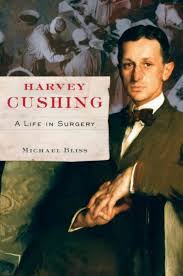
harvey-book

I found this biography fascinating!

I found Dr. Cushing’s life to be most interesting. I had previously known of him mainly because his name is associated with a disease I had – Cushing’s. This book doesn’t talk nearly enough about how he came to discover the causes of Cushing’s disease, but I found it to be a valuable resource, anyway.
I was so surprised to learn of all the “firsts” Dr. Cushing brought to medicine and the improvements that came about because of him. Dr. Cushing introduced the blood pressure sphygmomanometer to America, and was a pioneer in the use of X-rays.

He even won a Pulitzer Prize. Not for medicine, but for writing the biography of another Doctor (Sir William Osler).

Before his day, nearly all brain tumor patients died. He was able to get the number down to only 5%, unheard of in the early 1900s.

This is a very good book to read if you want to learn more about this most interesting, influential and innovative brain surgeon.


What Would Harvey Say?

More than 80 years ago renowned neurosurgeon, Dr. Harvey Cushing, discovered a tumor on the pituitary gland as the cause of a serious, hormone disorder that leads to dramatic physical changes in the body in addition to life-threatening health concerns. The discovery was so profound it came to be known as Cushing’s disease. While much has been learned about Cushing’s disease since the 1930s, awareness of this rare pituitary condition is still low and people often struggle for years before finding the right diagnosis.

Read on to meet the man behind the discovery and get his perspective on the present state of Cushing’s disease.

* What would Harvey Cushing say about the time it takes for people with Cushing’s disease to receive an accurate diagnosis?

Cushing’s disease still takes too long to diagnose!

Despite advances in modern technology, the time to diagnosis for a person with Cushing’s disease is on average six years. This is partly due to the fact that symptoms, which may include facial rounding, thin skin and easy bruising, excess body and facial hair and central obesity, can be easily mistaken for other conditions. Further awareness of the disease is needed as early diagnosis has the potential to lead to a more favorable outcome for people with the condition.

* What would Harvey Cushing say about the advances made in how the disease is diagnosed?

Significant progress has been made as several options are now available for physicians to use in diagnosing Cushing’s disease.

In addition to routine blood work and urine testing, health care professionals are now also able to test for biochemical markers – molecules that are found in certain parts of the body including blood and urine and can help to identify the presence of a disease or condition.

* What would Harvey Cushing say about disease management for those with Cushing’s disease today?

Patients now have choices but more research is still needed.

There are a variety of disease management options for those living with Cushing’s disease today. The first line and most common management approach for Cushing’s disease is the surgical removal of the tumor. However, there are other management options, such as medication and radiation that may be considered for patients when surgery is not appropriate or effective.

* What would Harvey Cushing say about the importance of ongoing monitoring in patients with Cushing’s disease?

Routine check-ups and ongoing monitoring are key to successfully managing Cushing’s disease.

The same tests used in diagnosing Cushing’s disease, along with imaging tests and clinical suspicion, are used to assess patients’ hormone levels and monitor for signs and symptoms of a relapse. Unfortunately, more than a third of patients experience a relapse in the condition so even patients who have been surgically treated require careful long-term follow up.

* What would Harvey Cushing say about Cushing’s disease patient care?

Cushing’s disease is complex and the best approach for patients is a multidisciplinary team of health care professionals working together guiding patient care.

Whereas years ago patients may have only worked with a neurosurgeon, today patients are typically treated by a variety of health care professionals including endocrinologists, neurologists, radiologists, mental health professionals and nurses. We are much more aware of the psychosocial impact of Cushing’s disease and patients now have access to mental health professionals, literature, patient advocacy groups and support groups to help them manage the emotional aspects of the disease.

From http://www.jsonline.com/sponsoredarticles/health-wellness/what-would-harvey-cushing-say-about-cushings-disease-today8087390508-253383751.html


🍰 Harvey Cushing: The father of modern neurosurgery

3117422_yjbm_84_2_91_g10


Harvey Cushing (1869-1939) is considered to be the father of modern neurological surgery. In the early part of the 20th century, he developed basic techniques and instruments for operating on the brain and, as a result, founded the discipline as a distinct surgical speciality. Before Cushing began his career, brain tumours were considered to be inoperable, and the mortality rate for any surgical procedure which involved opening the skull was around 90%. Early in his career, Cushing dramatically reduced the mortality rate for neurosurgery to less than 10%, and by the time of his retirement in 1937, he had successfully removed more than 2,000 tumours.

🦓 Day 6: Cushing’s Awareness Challenge


Way back when we first got married, my husband thought we might have a big family with a lot of kids.  He was from a family of 6 siblings, so that’s what he was accustomed to.  I am an only child so I wasn’t sure about having so many.

I needn’t have worried.

In January, 1974 I had a miscarriage.  I was devastated. My father revealed that my mother had also had a miscarriage.  I had no idea.

At some point after this I tried fertility drugs.  Clomid and another drug.  One or both drugs made me very angry/depressed/bitchy (one dwarf I left off the image)  Little did I know that these meds were a waste of time.

Eventually,  I did get pregnant and our wonderful son, Michael was born.  It wasn’t until he was seven that I was finally, actually diagnosed with Cushing’s.

When I had my early Cushing’s symptoms, I thought I was pregnant again but it was not to be.

I’ll never forget the autumn when he was in second grade.  He was leaving for school and I said goodbye to him.  I knew I was going into NIH that day for at least 6 weeks and my future was very iffy.  The night before, I had signed my will – just in case.  He just turned and headed off with his friends…and I felt a little betrayed.

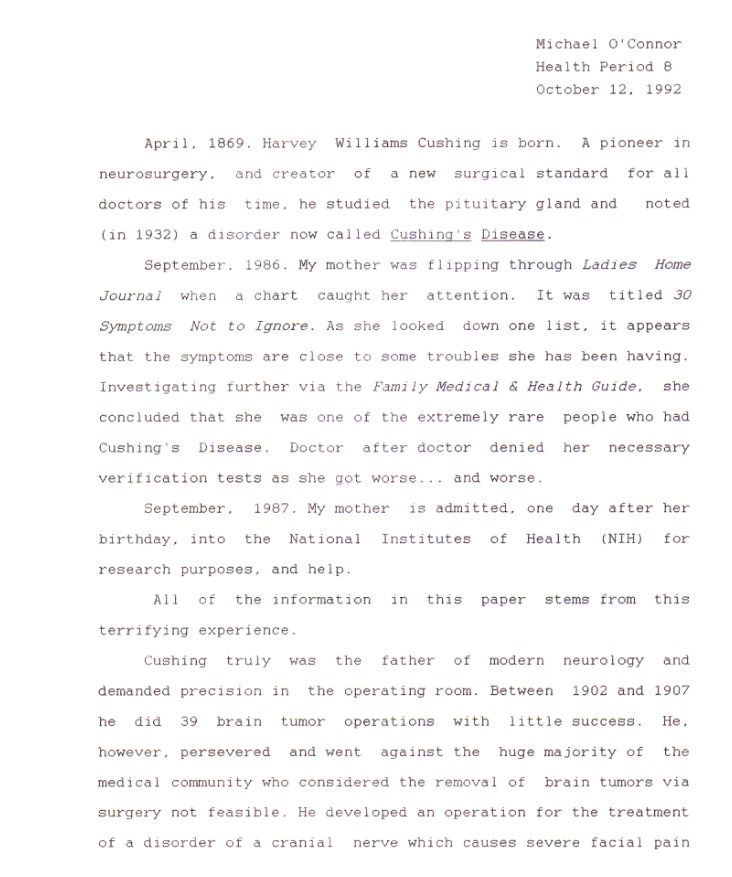
Michael wrote this paper on Cushing’s when he was in the 7th grade. From the quality of the pages, he typed this on typing paper – no computers yet!

Click on each page to enlarge.

When Michael started having headache issues in middle school, I had him tested for Cushing’s.  I had no idea yet if it could be familial but I wasn’t taking any chances.  It turned out that my father had also had some unnamed endocrine issues.  Hmmm…

I survived my time and surgery at NIH and Michael grew up to be a wonderful young man, if an only child.  🙂

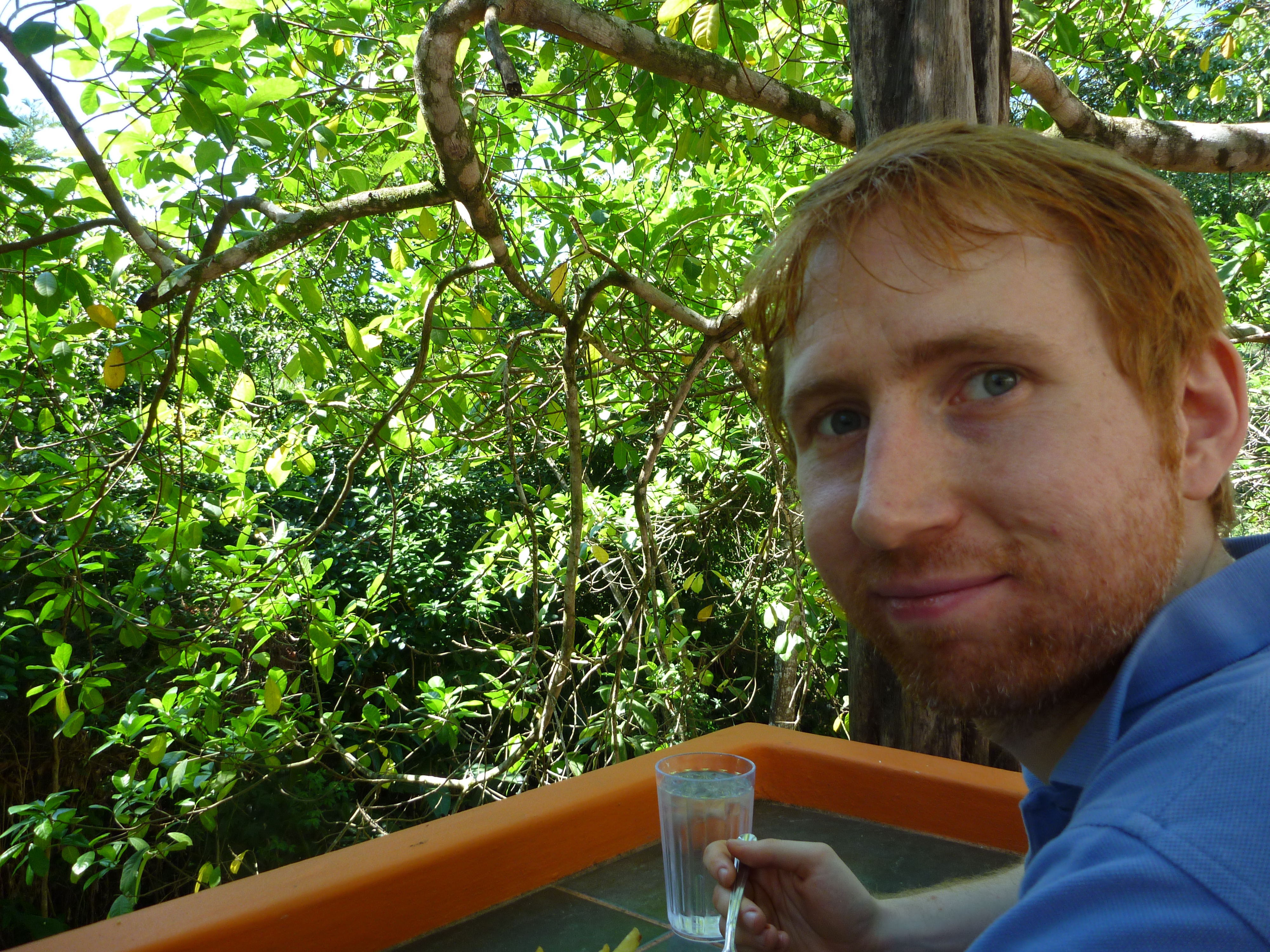
After I survived kidney cancer (Day Twelve, Cushing’s Awareness Challenge 2015) Michael and I went zip-lining – a goal of mine after surviving that surgery.  This photo was taken in a treetop restaurant in Belize.

For the mathematically inclined, this is his blog.  Xor’s Hammer.  I understand none of it.  He also has a page of Math and Music, which I also don’t understand.

I know it doesn’t fit into a Cushing’s awareness post but just because I’m a very proud mama – Michael got a PhD in math from Cornell and his thesis was Using Tree Automata to Investigate Intuitionistic Propositional Logic

These days, he’s working on Wall Street, running a Math Meetup, still playing the piano…

proud-mom

🦓 Day 4, Cushing’s Awareness Challenge

This is one of the suggestions from the Cushing’s Awareness Challenge post:

“Give yourself, your condition, or your health focus a mascot. Is it a real person? Fictional? Mythical being? Describe them. Bonus points if you provide a visual!”

Our “Official mascot” is the zebra.

Our mascot
Our mascot

In med school, student doctors are told “When you hear hoofbeats, think horses, not zebras“.

According to Wikipedia: “Zebra is a medical slang term for a surprising diagnosis. Although rare diseases are, in general, surprising when they are encountered, other diseases can be surprising in a particular person and time, and so “zebra” is the broader concept.

The term derives from the aphorism ‘When you hear hoofbeats behind you, don’t expect to see a zebra’, which was coined in a slightly modified form in the late 1940s by Dr. Theodore Woodward, a former professor at the University of Maryland School of Medicine in Baltimore.  Since horses are the most commonly encountered hoofed animal and zebras are very rare, logically you could confidently guess that the animal making the hoofbeats is probably a horse.

zebra-mug
A zebra cup my DH bought me 🙂

By 1960, the aphorism was widely known in medical circles.”

Why? Because those of us who DO have a rare disorder know from personal experience what it feels like to be dismissed by a doctor or in many cases, multiple doctors. Many physicians have completely lost the ability to even imagine that zebras may exist!  Cushing’s is too rare – you couldn’t possible have that.  Well… rare means some people get it.  Why couldn’t it be me?

Although one of my signature images has a zebra, many have rainbows or butterflies in them so I guess that I consider those my own personal mascots.

I posted this in 2010 in 40 Days of Thankfulness: Days Twenty-Two through Thirty

I have a special affinity for rainbows. To me, a rainbow is a sign that things are going to be ok.

Years ago, our little family was in Florida. I felt guilty about going because my dad was terminally ill with his second bout of colon cancer. I was worried about him and said a little prayer for him.

I was lying on the beach while DH and our son were in the ocean and I looked up and saw a rainbow. It was a perfectly clear, sunny afternoon. I even called the people out of the water, in case it was something I wanted to see that didn’t really exist. They saw it, too.

Where in the world did that rainbow come from, if it wasn’t a sign that everything would be ok?

Butterflies are something else again.  I like them because I would like to think that my life has evolved like a butterfly’s, from something ugly and unattractive to something a big easier on the eye.

My Cushie self was the caterpillar, post-op is more butterfly-ish, if not in looks, in good deeds.

From July, 2008

For as long as I can remember, I’ve loved butterflies for their beauty and what they stood for. I’ve always wanted to shed my cocoon and become someone else, someone beautiful, graceful.

One of my first memories as a kid was knocking on the back door of my house and when my mom answered, I’d pretend to somehow be an orphan, looking for some kind person to take me in. And I would try to be that different child, with new habits, in the hopes that my parents would somehow think better of me, love me more as this poor homeless kid than they did as their own.

The butterfly was trying to emerge but it never got too far. Somehow, I would slip into my original self and be a bother to my parents.

Hope springs eternal, though!

Adrenal Insufficiency Common After Adrenalectomy for Mild Autonomous Cortisol Secretion

Key takeaways:

  • Of adults who underwent an adrenalectomy for mild autonomous cortisol secretion, 54.4% developed adrenal insufficiency.
  • More than half of those with adrenal insufficiency recovered within 6 months.

More than half of adults who underwent a unilateral adrenalectomy to treat mild autonomous cortisol secretion developed adrenal insufficiency, according to data published in The Journal of Clinical Endocrinology & Metabolism.

In a retrospective study of patients who underwent an adrenalectomy at five centers in the U.S., adrenal insufficiency was diagnosed in 54.4% of the study group after the procedure. Adrenal insufficiency was more likely to be diagnosed among younger adults, and 73% of diagnosed adults recovered in less than 1 year with glucocorticoid treatment.

More than half of adults who underwent an adrenalectomy for mild autonomous cortisol secretion developed adrenal insufficiency. Data were derived from Hamidi O, et al. J Clin Endocrinol Metab. 2025;doi:10.1210/clinem/dgaf515.

“The findings support the use of both postoperative cortisol testing — basal cortisol or cosyntropin stimulation test — to accurately diagnose adrenal insufficiency and guide glucocorticoid therapy,” Irina Bancos, MD, MSc, professor of medicine and adrenal lab principal investigator in the division of endocrinology, metabolism and nutrition at Mayo Clinic, and Oksana Hamidi, DO, MSCS, associate professor in the division of endocrinology at UT Southwestern Medical Center, told Healio. “This testing approach can help avoid unnecessary glucocorticoid exposure while ensuring patient safety.”

Irina Bancos

Researchers collected data from 281 adults aged 18 years or older diagnosed with mild autonomous cortisol secretion between January 2013 and August 2024 who underwent a unilateral adrenalectomy (80% women; median age, 57 years). Patients were deemed to have adrenal insufficiency if they received a clinical diagnosis based on symptoms and results from basal cortisol and cosyntropin stimulation testing, if they had a basal cortisol level of less than 10 µg/dL and a stimulated cortisol level on a cosyntropin stimulation test of less than 18 µg/dL. If there were discordant basal cortisol level and cosyntropin stimulation test results, the decision to initiate glucocorticoid therapy was made by the treating physician, taking into account the clinical context and individual patient factors.

Of the study group, 54.4% were diagnosed with postoperative adrenal insufficiency and treated with glucocorticoids. In multivariable analysis, every 10 years of older age reduced odds for an adrenal insufficiency diagnosis by 33% (OR = 0.67; 95% CI, 0.53-0.84).

Bancos and Hamidi said they were surprised at how strong the association was between age and adrenal insufficiency.

Oksana Hamidi

“The strong inverse relationship between age and risk of adrenal insufficiency observed in our study could suggest that younger patients may derive greater benefit from adrenalectomy for mild autonomous cortisol secretion,” Bancos and Hamidi said. “Younger patients also had higher dexamethasone suppression test cortisol and lower adrenocorticotropic hormone, reflective of more severe mild autonomous cortisol secretion.”

Of the participants, 60.1% had a low basal cortisol level of less than 10 µg/dL, and 57.6% had a reduced simulated cortisol level of less than 18 µg/dL. Basal and stimulated cortisol were concordant on adrenal insufficiency diagnoses for 78% of patients. Adults who had bilateral nodules were more likely to have discordant results between the cortisol tests than adults with a unilateral nodule (32% vs. 19%; < .001).

Of adults diagnosed with adrenal insufficiency, 70.6% recovered during a median follow-up of 15.4 months. The proportion of diagnosed adults who recovered was 41% at 3 months, 60% at 6 months, 73% at 1 year and 84% at 18 months. Median recovery time was 3 months for adults with biochemically mild adrenal insufficiency, 4.7 months for those with moderate insufficiency and 14.5 months for adults with severe adrenal insufficiency (= .02). Recovery times were similar when adrenal insufficiency severity was assessed through clinical severity score.

Bancos and Hamidi said the study findings emphasize the importance of conducting frequent postoperative testing for adrenal insufficiency, noting that regular testing can help avoid prolonged glucocorticoid exposure for patients.

“Early recovery is common,” Bancos and Hamidi said. “Delayed testing may lead to unnecessary glucocorticoid exposure and delay recovery.”

Additionally, Bancos and Hamidi said dexamethasone and other steroids should not be given to patients during an adrenalectomy or while administering anesthesia, as they may confound cortisol testing. They said endocrinologists should work with the anesthesia and surgical teams to optimize timing of postoperative cortisol testing.

For more information:

Irina Bancos, MD, MSc, can be reached at bancos.irina@mayo.edu.

Oksana Hamidi, DO, MSCS, can be reached at oksana.hamidi@utsouthwestern.edu.

From https://www.healio.com/news/endocrinology/20251001/adrenal-insufficiency-common-after-unilateral-adrenalectomy?utm_source=selligent&utm_medium=email&utm_campaign=20251004ENDO&utm_content=20251004ENDO

Basics: What is Cushing’s disease?

MaryO’Note:  I found this article very simplistic.  What do you think?

This article is for informational purposes only and is not a substitute for professional medical advice, diagnosis or treatment. Contact a qualified medical professional before engaging in any physical activity, or making any changes to your diet, medication or lifestyle.

Imagine the heart-pounding rush of adrenaline you’d get while bungee jumping or zip lining — that’s what Angela Yawn felt all the time before receiving her diagnosis.

In a span of six years, the 49-year-old gained 52 kg (115 lbs) and suffered from joint swelling, headaches, skin redness and a racing heart.

“I would put my hand on my chest because it made me feel like that’s what I needed to do to hold my heart in,” Yawn, who lives in Griffin, U.S., told Today. “I noticed it during the day, but at night when I was trying to lie down and sleep, it was worse because I could do nothing but hear it beat, feel it thump.”

Yawn recalled being the most frustrated with the weight gain, as she’d put on 1 kg (2 lbs) a day while only eating 600 calories. “I was going crazy,” she said.

After dozens of doctors couldn’t piece together her seemingly unrelated symptoms, Yawn sought out the help of an endocrinologist in February 2021.

Blood tests and an MRI confirmed that Yawn had a tumour in her pituitary gland — a small, pea-sized organ at the base of the brain — that caused the gland to release excess adrenocorticotropic hormones. As a result, she became inundated with cortisol, a steroid the body  releases  in response to danger or stress. This combination of factors led to her diagnosis — Cushing’s disease.

Read on to learn more about Cushing’s disease, signs and symptoms as well as how it can be prevented.

What is Cushing’s disease?

“Cushing’s disease is a rare but serious condition that is caused by a pituitary tumour,” a specialist from the University of California, Los Angeles (UCLA) pituitary team tells Yahoo Canada. “The gland releases excessive adrenocorticotropic hormones and cortisol into the blood over a long period of time. It’s a hormonal disorder that is sometimes called hypercortisolism, and you will need to see an endocrinologist or someone who specializes in hormonal-related diseases to confirm your diagnosis and to help you receive proper care.”

Cushing’s disease is not the same as Cushing’s syndrome, which refers to elevated levels of cortisol in the blood and is much more common than Cushing’s disease. Unlike the disease, Cushing’s syndrome can be  caused  by taking medications that have cortisol such as prednisone, asthma inhalers and joint steroid injections.

Who is at risk for Cushing’s disease?

Cushing’s disease is incredibly rare, resulting in only 10 to 15 new cases per million people in the United States each year, according to UCLA Health.

“It’s most commonly found in people between the ages of 20 and 50, and affects about three times more women than men,” the UCLA source, who asked not to be named, says. “However, you might be more at risk if you have high blood pressure, if you’re overweight or if you have type 2 diabetes.”

What are the signs and symptoms of Cushing’s disease?

Although each person may have a unique combination of symptoms, patients typically experience changes to their physical appearance, according to Mayo Clinic.

“It’s very common to see rapid weight gain, red cheeks and bruising of the skin,” the UCLA source says. “I’ve also seen patients with generalized fatigue, depression, high blood pressure, a rapid heartbeat and loss of vision.”

“The symptoms can seem random or unrelated, which is why it can be so hard to diagnose,” they add.

To establish if you have the disease, your doctor will conduct a physical exam and ask you about your symptoms and medical history. Generally, the first step in diagnosing Cushing’s disease is determining the state of excess cortisol in the blood. Afterwards, an MRI will determine if a pituitary tumour is visible.

If you have symptoms of Cushing’s disease, you should make an appointment to see a doctor or endocrinologist.

How is Cushing’s disease treated?

In the last decade, treatment options have changed thanks to several breakthroughs in pituitary science.

“Surgery to remove the tumour is normally the first treatment option. It’s minimally invasive, has a fairly high success rate and it’s the only long-term cure for Cushing’s disease at the moment,” explains the UCLA source.

If surgery isn’t an option or doesn’t solve the problem, medication and radiation therapy are other ways to treat the disease.

“No matter the stage of the disease at the time of diagnosis, treating it requires an experienced specialist or team of doctors familiar with pituitary tumours,” the UCLA source adds.

How can I prevent Cushing’s disease?

“There’s no tried and true method of preventing the condition,” the source explains. “But if you’re at risk or if you think you have the disease, I always recommend having a doctor monitor your cortisol levels on a regular basis.”

The UCLA source also recommends implementing healthy  lifestyle  changes that can help prevent high blood pressure. Examples include reducing stress, getting adequate sleep, exercising regularly and eating a healthy  diet  that’s rich in fruits, vegetables and whole grains.

Adapted from https://ca.news.yahoo.com/what-is-cushings-disease-experts-warn-rare-serious-condition-120015725.html

⁉️ Myth: “All Cushing’s patients have the exact same symptoms

Myth: “All Cushing’s patients have the exact same symptoms and the level of illness is the same for everyone. If you do not have ALL of the classic symptoms of Cushing’s, then you must NOT have Cushing’s Syndrome/Disease!”

myth-busted

Fact: Everyone does NOT have the exact same symptoms. Not all Cushing’s patients are exactly the same. This is one mistake that non experts tend to make in terms of categorizing patients by whether they meet the exact same classic symptoms or not. Experts have come to learn that each patient should be treated individually. Though there are symptoms that are more prominent in the Cushing’s population, not every patient has to meet every single symptom in order to meet criteria for Cushing’s.

For instance, not all Cushing’s patients become overweight. Everyone does not gain the same amount of weight. There are various theories as to why. One issue is that different patients are diagnosed at different stages of the illness. We know that patients tend not to be diagnosed at the onset of the illness because of doctors’ misconception that Cushing’s patients must be extremely obese to have the disease. So, patients who have not gained as much weight may not be listened to until after the weight has gotten out of control. However, there ARE patients who are diagnosed early enough where there has not been a tremendous amount of weight gain.

I (Karen Ternier Thames), for one, started trying to get help after gaining my first 30 pounds because I KNEW that something was wrong with my body. Had I received an appropriate diagnosis, I probably would not have gained the 150 pounds I ended up gaining in 5 years.

Regardless of the reason, it is a myth that all Cushing’s patients gain the same amount of weight. The following are other additional reasons that an endocrinologist gave me for supposedly not meeting the criteria for Cushing’s when I was misdiagnosed: “1. Your stretch marks are not purple enough”, 2. “Your buffalo hump is not large enough”, 3. “You are not THAT fat!”, 4. “Cushing’s patients do NOT have children”, and 5. ” your face does not look like a classic moon face”. These are some of the reasons why, 2 years earlier, this same doctor dismissed apparently high cortisol levels, and didn’t even tell me, leading to several more years of suffering!

So, not all Cushing’s patients are obese, not all Cushing’s patients gain the same weight at the same rate, not all Cushing’s patients have the same size buffalo hump or the same round moon face. There are variations in these symptoms. IF you are experiencing extreme changes in your body regardless of diet and exercise and its not influenced by external factors, then it is time to speak up!

It is important to raise concern with your doctor if you do have ANY Cushing’s symptoms. Please do not be inhibited if you do not show every single symptom!