Light Up for Rare

The National Organization for Rare Disorders (NORD) asks Americans to plan ahead to participate in the Light Up for Rare campaign to raise awareness of rare diseases.

NORD is the U.S. sponsor for  Rare Disease Day  on Feb. 28. The annual awareness day spotlights approximately 7,000 rare diseases that affect more than 300 million people worldwide. More than 25 million Americans and their families are believed to be affected by rare diseases.

Participants are encouraged to light or decorate their homes in blue, green, pink, and purple at 7 p.m. local time on Feb. 28. (Blue should be used if only one color is possible.) NORD suggests using NovaBright to light up a building, monument, home, or neighborhood in these rare disease colors.

To join the Light Up for Rare campaign, sign up here. Participants should complete the applications required by the landmarks they pledge to light up, which could include historic buildings and homes, schools and universities, businesses, stadiums, bridges, and monuments. A downloadable template request is available to ask cities and buildings to participate in the initiative.

Once requests are approved, participants should inform NORD so the organization can track the buildings that will be illuminated for Rare Disease Day.

Light Up for Rare is part of the Global Chain of Lights campaign, which aims to unite the rare disease community across the globe and symbolically break the isolation caused by the COVID-19 pandemic.

The European Organization for Rare Diseases (EURORDIS), NORD’s counterpart in Europe, is coordinating the Feb. 28 awareness day there along with several patient advocacy groups. On leap years, Rare Disease Day falls on Feb. 29, the rarest day of the year.

Download the Light Up for Rare toolkit here. Information on how to illuminate a building can be found here

The general public, as well as caregivers, healthcare professionals, researchers, clinicians, policymakers, and industry representatives are encouraged to participate in Rare Disease Day advocacy and events. Other toolkits and resources for Rare Disease Day are available here.

After buildings and landmarks are lit up in Rare Disease Day colors, participants are encouraged to share photos and videos on social media. Please use the #RareDiseaseDay and #ShowYourStripes hashtags so the efforts can be spotlighted.

More information at https://rarediseases.org/rare-disease-day/rare-disease-day-light-up-for-rare/
Record a Video and Receive Rarity the Zebra!

Please help us spread the word to other patients and caregivers about Rare Patient Voice by submitting a short video about your experience with us. Using the Storyvine app, recording a video on your phone is quick, easy, and fun! Videos will be featured on our website, on social media, and in newsletters.

Check out and join the growing group of RPV patients and caregivers who have recorded stories! https://rarepatientvoice.com#sharevoice

Follow these steps to record and submit your own video!

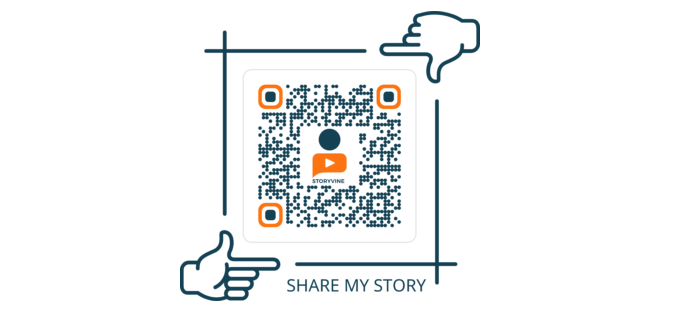
Step 1: Scan with code below with the camera app from your Apple/Android mobile device or click the link below!

https://admin.storyvine.com/app_users/sign_up/Sharing_My_Voice

Step 2: Download the Storyvine app from the App Store or Google Play

Step 3: Film and upload your video!

To thank you for recording a video, we will send you a Rarity zebra plushie AND enter you in a raffle to win a $100 Amazon gift card. Congratulations to Stacy of South Carolina, our December 1 raffle winner! Our next raffle will be held in early January.

👥 Register for Rare Disease Week

We are thrilled to invite you to join us and hundreds of others virtually for Rare Disease Week on Capitol Hill from February 22nd to March 2nd, for a week that can change your life. In 2022 advocates will once again have the opportunity to participate in the Points for Advocacy Scavenger Hunt and the EveryLife Foundation will award a total of $100,000 to the top-50 point earners’ rare disease non-profit organization of choice!

Over the last 11 years, thousands of rare disease patients, family members, friends, and health care providers have joined together to give rare disease patients a voice on Capitol Hill. Meeting virtually during the pandemic has not slowed us down but has reenergized many of us on the importance of our advocacy work.

Both of our first times attending Rare Disease Week, Sarah in 2017 and Sarita in 2021, sparked our passion for advocacy!  We hope that you will join us for Rare Disease Week which brings the community together to learn, network and advocate.

Please reach out to RDLA staff Katelyn Laws at klaws@everylifefoundation.org if you have any questions or need more information.

❓Clinical Trial: Congenital Adrenal Hyperplasia (CAH)


The CAHmelia clinical trials are exploring a new investigational treatment for classic CAH.

CAHmelia 203 and CAHmelia 204 are clinical trials to test tildacerfont in adults with classic CAH, which may offer you and your loved ones hope of a brighter future – one where you may not have to choose between symptom management and long-term health.
Tildacerfont is a new type of oral, once-daily investigational treatment – one that is not a steroid – that is currently being tested in adults with classic CAH. By reducing the amount of androgens your body makes, tildacerfont may improve your classic CAH symptoms.
This investigational treatment will not replace your steroid treatment but may allow you to manage your disease with lower amounts of steroids at normal or near-normal doses.

Who can take part in this trial? You may be able to take part if you:Are at least 18 years of ageHave a confirmed diagnosis of classic CAH due to 21-OH deficiencyHave been on the same daily dose of steroids (GCs and/or mineralocorticoids) for at least 1 month before starting the trialBoth trials are now open for enrollment.
Tildacerfont is an investigational treatment not authorized for use in people outside the clinical trial.
For more information, go to: clarahealth.com/studies/cahmelia

​​​​​​​ 

👍 Research Opportunity! All of Us

I just signed up for this because it may be helpful for researchers at the NIH and elsewhere to learn more about Cushing’s, cancer, whatever else they can learn from my history.
Over 35 years ago, I agreed to be a part of a study at NIH so they could learn more about Cushing’s.  I consider this to be a larger, easier part of what I did back then.

From my bio: https://cushingsbios.com/2018/10/28/maryo-pituitary-bio/

As luck would have it, NIH (National Institutes of Health, Bethesda, Maryland) was doing a clinical trial of Cushing’s. I live in the same area as NIH so it was not too inconvenient but very scary at first to think of being tested there. At that time I only had a choice of NIH, Mayo Clinic and a place in Quebec to do this then-rare pituitary surgery called a Transsphenoidal Resection. I chose NIH – closest and free. After I was interviewed by the Doctors there, I got a letter that I had been accepted into the clinical trial. The first time I was there was for 6 weeks as an inpatient. More of the same tests.

There were about 12 of us there and it was nice not to be alone with this mystery disease. Many of these Cushies (mostly women) were getting bald, couldn’t walk, having strokes, had diabetes. One was blind, one had a heart attack while I was there. Towards the end of my testing period, I was looking forward to the surgery just to get this whole mess over with. While I was at NIH, I was gaining about a pound a day!

The MRI still showed nothing, so they did a Petrosal Sinus Sampling Test. That scared me more than the prospect of surgery. (This test carries the risk of stroke and uncontrollable bleeding from the incision points.) Catheters were fed from my groin area to my pituitary gland and dye was injected. I could watch the whole procedure on monitors. I could not move during this test or for several hours afterwards to prevent uncontrollable bleeding from a major artery. The test did show where the tumor probably was located. Also done were more sophisticated dexamethasone suppression tests where drugs were administered by IV and blood was drawn every hour (they put a heplock in my arm so they don’t have to keep sticking me). I got to go home for a weekend and then went back for the surgery – the Transsphenoidal Resection. I fully expected to die during surgery (and didn’t care if I did) so I signed my will and wrote last letters to those I wanted to say goodbye to. During the time I was home just before surgery, a college classmate of mine (I didn’t know her) did die at NIH of a Cushing’s-related problem. I’m so glad I didn’t find out until a couple months later!

November 3, 1987, the surgeon, Dr. Ed Oldfield, cut the gum above my front teeth under my upper lip so there is no scar. He used tiny tools and microscopes. My tumor was removed successfully. In some cases (not mine) the surgeon uses a plug of fat from the abdomen to help seal the cut. Afterwards, I was in intensive care overnight and went to a neurology ward for a few days until I could walk without being dizzy. I had some major headaches for a day or two but they gave me drugs (morphine) for those. Also, I had cotton plugs in my nostrils. It was a big day when they came out. I had diabetes insipidus (DI) for a little while, but that went away by itself – thank goodness!

I had to use a foam product called “Toothies” to brush my teeth without hitting the incision. Before they let me go home, I had to learn to give myself an injection in my thigh. They sent me home with a supply of injectable cortisone in case my level ever fell too low (it didn’t). I was weaned gradually off cortisone pills (scary). I now take no medications. I had to get a Medic Alert bracelet. I will always need to tell medical staff when I have any kind of procedure – the effects of my excess cortisone will remain forever.

I went back to the NIH for several follow-up visits of a week each where they did all the blood and urine testing again. After a few years NIH set me free. Now I go to my “outside” endocrinologist every year for the dexamethasone suppression test, 24-hour urine and regular blood testing.

Health discoveries come from research. Research starts with you.

Join the largest and most inclusive health research initiative of its kind. You could help researchers find answers to the most pressing health questions.

The All of Us WEAR Study has begun!
As a part of this optional study, you could receive a new Fitbit® to wear. All of Us will be able to get the data the Fitbit collects to help researchers understand how behavior impacts health.

Want to help others, too?  Sign up at https://go.joinallofus.org/

📞Webinar on The 20-minute Mini Back Scope Adrenalectomy (MBSA)


Dr. Friedman will host Tobias Carling, MD, PhD, FACS
Surgeon-in-Chief & Founder
Carling Adrenal Center
Hospital for Endocrine Surgery
www.adrenal.com
Who will talk on:
The 20-minute Mini Back Scope Adrenalectomy (MBSA)

The Carling Adrenal Center is the world’s busiest adrenal surgery center, operating on patients from all 50 states and all over the world.

Dr. Carling is the most experienced adrenal surgeon in the United States, and by far the world’s most knowledgeable surgeon-scientist when it comes to adrenal gland function and disease, adrenal tumors and cancer, and all forms of adrenal gland surgery. Dr. Carling has more experience with advanced minimally invasive adrenal and endocrine operations than any surgeon in the United States. A fellow of the American College of Surgeons, Dr. Carling is a significant member of both the American Association of Endocrine Surgeons (AAES) and the International Association of Endocrine Surgeons (IAES).

Dr. Carling spent 17.5 years at Yale University and the Yale University School of Medicine where he served as the Chief of Endocrine Surgery, Associate Professor of Surgery, Program Director of the Yale Endocrine Surgery Fellowship and the Founder & Director of the Yale Endocrine Neoplasia Laboratory, a supreme scientific program focused on the molecular pathogenesis of tumors arising in the adrenal, thyroid and parathyroid glands.

Dr. Carling moved his world-renowned adrenal surgery program to Tampa, Florida in early 2020 to start the Carling Adrenal Center. Here, patients needing adrenal surgery have access to the best practices and best techniques the world has to offer.

Dr. Carling works closely with Dr. Friedman and will be able to perform a Mini Back Scope Adrenalectomy with a referral from Dr. Friedman.
Sunday • November 7• 6 PM PST

Via Zoom Click here to join the meeting or
https://us02web.zoom.us/j/4209687343?pwd=amw4UzJLRDhBRXk1cS9ITU02V1pEQT09
OR
+16699006833,,4209687343#,,,,*111116#
Slides will be available before the webinar and recording after the meeting at slides

Your phone/computer will be muted on entry. There will be plenty of time for questions using the chat button.
For more information, email us at mail@goodhormonehealth.com

💉 Did You Get The Pfizer Vaccine? You May Need the Booster

What You Need to Know

COVID-19 Vaccine booster shots are available for the following Pfizer-BioNTech vaccine recipients who completed their initial series at least 6 months ago and are:

Those “underlying medical conditions” include diabetes and obesity.

🎤 4th Pituitary Update | Perelman School of Medicine at the University of Pennsylvania

Friday, October 8, 2021

7:45 am – 4:00 pm

OVERVIEW

This conference will present the newest approaches and techniques in the diagnosis and treatment of pituitary adenomas, including acromegaly and Cushing’s disease. Diagnosis and treatment will be covered from the interdisciplinary and interprofessional perspective of endocrinology, radiology, neuro-ophthalmology, neurosurgery, and radiation oncology. Didactic presentations will include case discussions. The conference format, although virtual will provide a significant opportunity for interaction with expert faculty. A simulcast of transsphenoidal surgery will occur throughout the conference with real-time discussion and case review of the progress on the day of surgery, post-op management, surveillance and follow-up care.

Participants will leave with up-to-date, practical information and written resources including: DDAVP stimulation protocol for Cushing’s disease localization, perioperative glucocorticoid and salt-water monitoring protocol, clinic note templates, laboratory testing panels, “Sick Day Rules” letter for patients with adrenal insufficiency.  These materials will have immediate clinical application and help streamline care of pituitary patients at the office and during hospitalizations.

LEARNING OBJECTIVES – CME

Upon completion of this conference, participants should be able to:

  • Evaluate a sellar mass to determine if it is a pituitary adenoma or other lesion
  • Identify the value and limits of MRI in evaluating a sellar mass
  • List the potential and limits of endoscopic transsphenoidal surgery for pituitary adenoma
  • Manage, medically, a patient following endonasal surgery
  • List the different types of radiation, including linear accelerator (IMRT, Cyberknife), gamma radiation, (Gamma Knife) and proton beam
  • Treat, medically, patients who have acromegaly and Cushing’s disease
  • Apply multidisciplinary, interprofessional and interdisciplinary approach in the management of pituitary disease

LEARNING OBJECTIVES – PATIENTS

  • Upon completion of this course patients, families and advocates will be able to:
  • Identify the latest advances in pituitary tumor treatment
  • Demonstrate familiarity with the terminology and technical aspects of pituitary tumor care
  • Demonstrate patient-active behavior in working with the healthcare team to make ongoing treatment decisions

WHO SHOULD ATTEND

This activity has been designed for endocrinologists, neurosurgeons, ophthalmologists, gynecologists, general radiologists, nurse practitioners, nurses, residents and fellows. Additionally, patients and their caregivers, family members, advocates and members of the public who may benefit from understanding current innovative approaches to pituitary tumor care are invited.

For additional information please contact Hyacen Putmon.

Register Now

💉 Dr. Friedman: COVID-19 Vaccine Third Shots vs Booster Shots

Dr. Friedman is getting a lot of emails on booster shots versus third shots. Third shots are for immuno-compromised patients that the FDA is recommending for a small group of patients The FDA also has the intention to soon make booster doses widely available to all healthy individuals. I am writing to clarify the difference between booster shots and third doses.

Third Doses for Immuno-Compromised Patients
The purpose of a third dose of mRNA vaccine is to give immuno-compromised patients the same level of protection that two doses provide someone who has a normal immune system.
It is recommended that the following people get a third dose

  • Been receiving cancer treatment for tumors or cancers of the blood
  • Received an organ transplant and are taking medicine to suppress the immune system
  • Received a stem cell transplant within the last two years or are taking medicine to suppress the immune system
  • Been diagnosed with moderate or severe immunodeficiency conditions (such as DiGeorge syndrome, Wiskott-Aldrich syndrome)
  • An advanced or untreated HIV infection
  • Been under active treatment with high-dose corticosteroids (> 20 mg of prednisone or 100 mg of hydrocortisone) or other drugs that may suppress immune response

Dr. Friedman thinks it is unlikely that any of his patients have these conditions.
Patients with Cushing’s syndrome, Addison’s, diabetes or thyroid disorders do not qualify.

In contrast, a Booster Dose is for Patients With Healthy Immune Systems
A booster dose—which is different from a third dose for immuno-compromised patients—is for healthy patients and is meant to enhance immunity and may protect against new variants of the virus. The Biden administration has announced that it intends to make booster doses available for people with healthy immune systems in September 2021, after they are authorized or approved by the FDA. This has not happened yet, but when it happens, Dr. Friedman would encourage his patients to get it.

Dr. Friedman is expecting a booster shot against the Delta variant to be released in the fall of 2021 and would recommend that for his patients.
Dr. Friedman wishes everyone to stay healthy.

🏆 Last chance to submit a RareVoice Nomination!


1) Visit RareVoiceAwards.org

2) Review the 2021 RareVoice categories

3) Nominate an advocate who gave rare disease patients a voice on

Capitol Hill and in state government in 2020 and 2021.

4) Submit!

The RareVoice Awards recipients are chosen by a committee from nominations received from the rare disease community.

 
Nominations close August 27th, 2021
Federal Advocacy – Congressional Staff
Honors congressional staffers who have worked to create and enact policies for the rare disease community

Federal Advocacy – Patient/Organization
Honors advocates or organizations that have worked to create and pass federal legislation

State Advocacy – State Legislator
Honors state legislators who have worked to create and enact policies for the rare disease community

State Advocacy – Patient/Organization
Honors advocates or organizations that have worked to create and pass state legislation

Federal or State Advocacy by a Teenager
Honors teen advocates that have advocated for state or federal legislation

Diversity Empowerment – Patient/Organization
Honors advocates or organizations that empowered diverse voices in advocacy

Artist-to-Advocate
Honors individuals who have utilized their artwork to advocate for federal or state legislation

For information about sponsorship, please contact Elissa Taylor, etaylor@everylifefoundation.org
EveryLife Foundation For Rare Diseases
1012 14th Street, NW, Suite 500 | Washington, District of Columbia 20005
202-697-7273 | info@everylifefoundation.org