🦓 Day 12, Cushing’s Awareness Challenge 2022

In March of 1987, after the endo finally confirmed that I had Cushing’s, I was sent to a local hospital where they repeated all those same tests for another week and decided that it was not my adrenal gland (Cushing’s Syndrome) creating the problem. The doctors and nurses had no idea what to do with me, so they put me on the brain cancer ward.

When I left this hospital after a week, we didn’t know any more than we had before.

As luck would have it, NIH (National Institutes of Health, Bethesda, Maryland) was doing a clinical trial of Cushing’s. I live in the same area as NIH so it was not too inconvenient but very scary at first to think of being tested there. At that time I only had a choice of NIH, Mayo Clinic and a place in Quebec to do this then-rare pituitary surgery called a Transsphenoidal Resection.

My husband asked my endo if it were his wife, if he would recommend this surgery.  The endo responded that he was divorcing his wife – he didn’t care what happened to her.  Oh, my!

I chose NIH – closest and free. After I was interviewed by the doctors there, I got a letter that I had been accepted into the clinical trial.

The night before I was admitted, I signed my will.  I was sure I was going to die there.  If not during testing, as a result of surgery.


The first time I was there was for 6 weeks as an inpatient. More of the same tests.

There were about 12 of us there and it was nice not to be alone with this mystery disease. Many of these Cushies (mostly women) were getting bald, couldn’t walk, having strokes, had diabetes. One was blind, one had a heart attack while I was there. Several were from Greece.

My first roommate was a nurse.  She spent the entire first night screaming in pain.  I was very glad when they moved me to a new room!

Towards the end of my testing period, I was looking forward to the surgery just to get this whole mess over with – either a cure or dying. While I was at NIH, I was gaining about a pound a day!

During the time I was home the weekend  before surgery, a college classmate of mine (I didn’t know her) DID die at NIH of a Cushing’s-related problem. I’m so glad I didn’t find out until reading the alumnae magazine a couple months later!  She was the same class, same major, same home-town, same disease…

We have a Scottish doctor named James Lind to thank for the clinical trial.  He  conducted the first ever clinical trial in 1747 and developed the theory that citrus fruits cured scurvy.  Lind  compared the effects of various different acidic substances, ranging from vinegar to cider, on groups of afflicted sailors, and found that the group who were given oranges and lemons had largely recovered from scurvy after 6 days.

I’d like to think that I advanced the knowledge of Cushing’s at least a little bit by being a guinea  pig in 1987-1989.

From the NIH: http://endocrine.niddk.nih.gov/pubs/cushings/cushings.aspx

Hope through Research

Several components of the National Institutes of Health (NIH) conduct and support research on Cushing’s syndrome and other disorders of the endocrine system, including the National Institute of Diabetes and Digestive and Kidney Diseases, the National Institute of Child Health and Human Development (NICHD), the National Institute of Neurological Disorders and Stroke, the National Cancer Institute, and the National Center for Research Resources.

NIH-supported scientists are conducting intensive research into the normal and abnormal function of the major endocrine glands and the many hormones of the endocrine system. Researchers continue to study the effects of excess cortisol, including its effect on brain structure and function. To refine the diagnostic process, studies are under way to assess the accuracy of existing screening tests and the effectiveness of new imaging techniques to evaluate patients with ectopic ACTH syndrome. Researchers are also investigating jugular vein sampling as a less invasive alternative to petrosal sinus sampling. Research into treatment options includes study of a new drug to treat the symptoms of Cushing’s syndrome caused by ectopic ACTH secretion.

Studies are under way to understand the causes of benign endocrine tumor formation, such as those that cause most cases of Cushing’s syndrome. In a few pituitary adenomas, specific gene defects have been identified and may provide important clues to understanding tumor formation. Endocrine factors may also play a role. Increasing evidence suggests that tumor formation is a multistep process. Understanding the basis of Cushing’s syndrome will yield new approaches to therapy.

The NIH supports research related to Cushing’s syndrome at medical centers throughout the United States. Scientists are also treating patients with Cushing’s syndrome at the NIH Clinical Center in Bethesda, MD. Physicians who are interested in referring an adult patient may contact Lynnette Nieman, M.D., at NICHD, 10 Center Drive, Room 1-3140, Bethesda, MD 20892-1109, or by phone at 301-496-8935. Physicians interested in referring a child or adolescent may contact Constantine Stratakis, M.D., D.Sc., at NICHD, 10 Center Drive, Room 1-3330, Bethesda, MD 20892-1103, or by phone at 301-402-1998.


🎤 Archived Interview with Judy, Mom to Two Cushing’s Patients, and her Daughter, Jess


Interview with Judy, the mother of two Cushing’s patients, and her daughter, Jess, a high school student with Cushing’s. Robin (staticnrg) hosted.

Sadly, Judy died on December 15, 2019, after battling lung cancer, Atrial fibrillation, and total body weakness.  She was a great warrior for her children.  Here’s her bio: https://cushingsbios.com/2019/12/15/in-memory-judy-kennedy-december-15-2019/


Listen at http://www.blogtalkradio.com/cushingshelp/2008/01/17/judy-mom-to-2-cushings-patients-and-her-daughter-jess

HOME | Sitemap | Abbreviations | Adrenal Crisis! | Glossary | Forums | Bios | Add Your Bio | Add Your Doctor | MemberMap | CushieWiki

⁉️ Cushing’s Myths and Facts: “All types of Cushing’s are the same”

Myth: “All types of Cushing’s are the same”

myth-busted

Fact: In the words of our dear friend and advocate, Robin Ess, “There are many genetic varieties with quite a few discovered in the past couple of years. Plus, there are several types such as adrenal, ectopic, and pituitary. And so on”….Amazingly, some doctors do not realize that there are different varieties of Cushing’s and that the symptoms can come from a different source.

For instance, a doctor might rule out a pituitary tumor and completely dismiss the patient, even with biochemical evidence of Cushing’s. That doctor, instead of dismissing the patient, should thoroughly look for other potential sources, such as an adrenal tumor, or yet another source. Did you know that tumors on one’s lungs can even cause Cushing’s? Most people don’t know that.

For more information about the different types of Cushing’s, please read: http://www.mayoclinic.org/diseases-conditions/cushing-syndrome/basics/causes/con-20032115

Another great article regarding ectopic Cushing’s can be found here: http://www.nejm.org/doi/full/10.1056/NEJM199809243391304#.VH-80v5f2s8.facebook

MaryONote: Folks might be interested in listening to this podcast episode with Jayne, a Cushing’s patient who had pituitary surgeries and a bilateral adrenalectomy before finding the true source of her ectopic Cushing’s – lung tumors.

http://www.blogtalkradio.com/cushingshelp/2008/01/31/tentative-date-an-interview-with-jayne-cyclical-cushings-patient

HOME | Sitemap | Abbreviations | Adrenal Crisis! | Glossary | Forums | Bios | Add Your Bio | Add Your Doctor | MemberMap | CushieWiki

🦓 Day 9, Cushing’s Awareness Challenge 2022

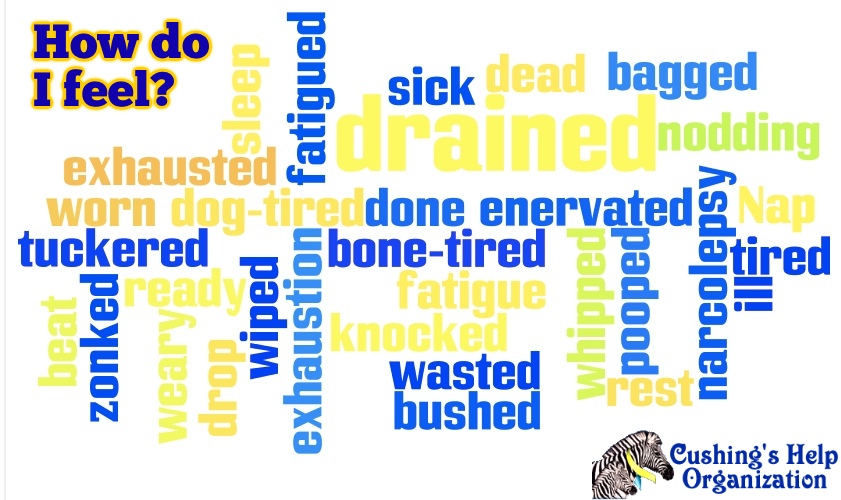
Uh, Oh – I’m nearly a day late (and a dollar short?)…and I’m not yet sure what today’s topic will be.  I seem swamped by everything lately, waking up tired, napping, going to bed tired, waking up in the middle of the night, starting all over again…and the coronavirus which makes everything more hectic, stressful and tiring.

It’s been like this since I was being diagnosed with Cushing’s in the mid-1980’s.  You’d think things would be improved in the last 33 years.  But, no.

My mind wants things to have improved, so I’ve taken on more challenges, and my DH has provided some for me (see one of my other blogs, MaryOMedical).

Thank goodness, I have only part-time jobs (4 0f them!), that I can mostly do from home.  I don’t know how anyone post-Cushing’s could manage a full-time job!

I can see this post morphing into the topic “My Dream Day“…

I’d wake up refreshed and really awake at about 7:00AM and take the dog out for a brisk run.

Get home about 8:00AM and start on my website work.

Later in the morning, I’d get some bills paid – and there would be enough money to do so!

After lunch, out with the dog again, then practice the piano some, read a bit, finish up the website work, teach a few piano students, work on my church job, then dinner.

After dinner, check email, out with the dog, maybe handbell or choir practice, a bit of TV, then bed about 10PM

Nothing fancy but NO NAPS.  Work would be getting done, time for hobbies, the dog, 3 healthy meals.

Just a normal life that so many take for granted. Or, do they?

me-tired

🦓 From a Past Blogging Challenge

Since no other people signed up this year, I’m going to be reposting some past Blogging Challenge Posts:

From Danielle’s Blog at http://www.lifewithcushings.com/

Today, I’m going to be talking about my Cushing’s story, which still continues, even 8 years after I was diagnosed.

I remember the moment I realized something wasn’t right.  My mom was taking me to the mall, because none of my jeans fit me anymore.  She was talking about how she wished I would try to lose weight, because she has been overweight most of her life, and didn’t want that for me.  But, I needed pants to wear to school, so I bought another size up.  I remember thinking, nothing has changed.  I didn’t eat more, or less, I hadn’t stopped any activities.  Maybe this was just my metabolism slowing down.

Read more here: http://www.lifewithcushings.com/

🎤 Archived Interview: JenS discussed Bilateral Adrenalectomy (BLA)

Jen had Pituitary surgery by Dr. Shahinian 4/28/04, removed ACTH secreting corticotroph hyperplasia and prolactinoma.

She was diagnosed by Dr. Theodore Friedman as cyclical pituitary Cushings.

Her second Surgery 7/21/04 for infection resulted in neuralgia. She had a BLA in March 2006 as Corticol Hyperplasia returned and she now has possible Nelson’s syndrome. Jen also has Thyroid Issues (Hashimoto’s, multiple nodules and entire thyroid removed 2003) and she is Growth Hormone Deficient (3/2006)

Listen at http://www.blogtalkradio.com/cushingshelp/2008/02/29/jens-discusses-bilateral-adrenalectomy-bla

HOME | Sitemap | Abbreviations | Adrenal Crisis! | Glossary | Forums | Bios | Add Your Bio | Add Your Doctor | MemberMap | CushieWiki

🏞 Rebuilding the MemberMap

Slowly but surely, we’re rebuilding the Cushing’s Member Map. The location where we hosted it previously started charging huge amounts of money, so it’s being moved here.

Add your information (or your doctor’s) at https://cushingsbios.com/2018/10/28/we-have-a-new-bio-form/ or below:


⁉️ Cushing’s Myths and Facts: Cushing’s Syndrome/Disease can be healed or cured

Myth: Cushing’s Syndrome/Disease can be healed or cured through change in diet or exercise.

myth-busted

Fact: NO! Caloric intake or lack of exercise has NO impact on weight gain and/ or loss in persons with Cushing’s.

Saying that someone “cheated” on their diet may seem reasonable to some as a reason for weight gain but I assure you that a candy bar or a piece of pie does not make a person with Cushing’s gain weight or get sick. Excess cortisol is the reason for Cushing’s symptoms. Treating the disease is the only way to alleviate symptoms.

The first line of treatment with the highest rate of remission is currently surgery to remove the tumor (s) from the pituitary, adrenal gland, or ectopic source.

🎤 Archived Cushing’s Awareness Day Voice Chat!

Listen as Jayne Kerns and Robin Smith (staticnrg) hosted a Cushing’s Awareness Day Special Chat a few years ago.

This chat had callers and some testimonials for the website and Mary O’Connor (MaryO). Ideas were discussed for setting up non-profit status for this website.

Listen at http://www.blogtalkradio.com/cushingshelp/2008/04/09/special-cushings-awareness-day-voice-chat


HOME | Sitemap | Abbreviations | Adrenal Crisis! | Glossary | Forums | Bios | Add Your Bio | Add Your Doctor | MemberMap | CushieWiki

🦓 Day 8, Cushing’s Awareness Challenge 2022

It’s Here!

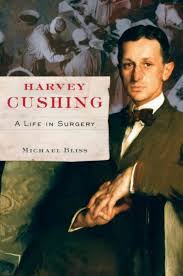
Dr. Cushing was born in Cleveland Ohio. The fourth generation in his family to become a physician, he showed great promise at Harvard Medical School and in his residency at Johns Hopkins Hospital (1896 to 1900), where he learned cerebral surgery under William S. Halsted

After studying a year in Europe, he introduced the blood pressure sphygmomanometer to the U.S.A. He began a surgical practice in Baltimore while teaching at Johns Hopkins Hospital (1901 to 1911), and gained a national reputation for operations such as the removal of brain tumors. From 1912 until 1932 he was a professor of surgery at Harvard Medical School and surgeon in chief at Peter Bent Brigham Hospital in Boston, with time off during World War I to perform surgery for the U.S. forces in France; out of this experience came his major paper on wartime brain injuries (1918). In addition to his pioneering work in performing and teaching brain surgery, he was the reigning expert on the pituitary gland since his 1912 publication on the subject; later he discovered the condition of the pituitary now known as “Cushing’s disease“.

Read more about Dr. Cushing

Today, April 8th, is Cushing’s Awareness Day. Please wear your Cushing’s ribbons, t-shirts, awareness bracelets or Cushing’s colors (blue and yellow) and hand out Robin’s wonderful Awareness Cards to get a discussion going with anyone who will listen.

And don’t just raise awareness on April 8.  Any day is a good day to raise awareness.


harvey-book

I found this biography fascinating!

I found Dr. Cushing’s life to be most interesting. I had previously known of him mainly because his name is associated with a disease I had – Cushing’s. This book doesn’t talk nearly enough about how he came to discover the causes of Cushing’s disease, but I found it to be a valuable resource, anyway.
I was so surprised to learn of all the “firsts” Dr. Cushing brought to medicine and the improvements that came about because of him. Dr. Cushing introduced the blood pressure sphygmomanometer to America, and was a pioneer in the use of X-rays.

He even won a Pulitzer Prize. Not for medicine, but for writing the biography of another Doctor (Sir William Osler).

Before his day, nearly all brain tumor patients died. He was able to get the number down to only 5%, unheard of in the early 1900s.

This is a very good book to read if you want to learn more about this most interesting, influential and innovative brain surgeon.


What Would Harvey Say?

harvey-book

(BPT) – More than 80 years ago renowned neurosurgeon, Dr. Harvey Cushing, discovered a tumor on the pituitary gland as the cause of a serious, hormone disorder that leads to dramatic physical changes in the body in addition to life-threatening health concerns. The discovery was so profound it came to be known as Cushing’s disease. While much has been learned about Cushing’s disease since the 1930s, awareness of this rare pituitary condition is still low and people often struggle for years before finding the right diagnosis.

Read on to meet the man behind the discovery and get his perspective on the present state of Cushing’s disease.

* What would Harvey Cushing say about the time it takes for people with Cushing’s disease to receive an accurate diagnosis?

Cushing’s disease still takes too long to diagnose!

Despite advances in modern technology, the time to diagnosis for a person with Cushing’s disease is on average six years. This is partly due to the fact that symptoms, which may include facial rounding, thin skin and easy bruising, excess body and facial hair and central obesity, can be easily mistaken for other conditions. Further awareness of the disease is needed as early diagnosis has the potential to lead to a more favorable outcome for people with the condition.

* What would Harvey Cushing say about the advances made in how the disease is diagnosed?

Significant progress has been made as several options are now available for physicians to use in diagnosing Cushing’s disease.

In addition to routine blood work and urine testing, health care professionals are now also able to test for biochemical markers – molecules that are found in certain parts of the body including blood and urine and can help to identify the presence of a disease or condition.

* What would Harvey Cushing say about disease management for those with Cushing’s disease today?

Patients now have choices but more research is still needed.

There are a variety of disease management options for those living with Cushing’s disease today. The first line and most common management approach for Cushing’s disease is the surgical removal of the tumor. However, there are other management options, such as medication and radiation that may be considered for patients when surgery is not appropriate or effective.

* What would Harvey Cushing say about the importance of ongoing monitoring in patients with Cushing’s disease?

Routine check-ups and ongoing monitoring are key to successfully managing Cushing’s disease.

The same tests used in diagnosing Cushing’s disease, along with imaging tests and clinical suspicion, are used to assess patients’ hormone levels and monitor for signs and symptoms of a relapse. Unfortunately, more than a third of patients experience a relapse in the condition so even patients who have been surgically treated require careful long-term follow up.

* What would Harvey Cushing say about Cushing’s disease patient care?

Cushing’s disease is complex and the best approach for patients is a multidisciplinary team of health care professionals working together guiding patient care.

Whereas years ago patients may have only worked with a neurosurgeon, today patients are typically treated by a variety of health care professionals including endocrinologists, neurologists, radiologists, mental health professionals and nurses. We are much more aware of the psychosocial impact of Cushing’s disease and patients now have access to mental health professionals, literature, patient advocacy groups and support groups to help them manage the emotional aspects of the disease.

Learn More

Novartis is committed to helping transform the care of rare pituitary conditions and bringing meaningful solutions to people living with Cushing’s disease. Recognizing the need for increased awareness, Novartis developed the “What Would Harvey Cushing Say?” educational initiative that provides hypothetical responses from Dr. Cushing about various aspects of Cushing’s disease management based on the Endocrine Society’s Clinical Guidelines.

For more information about Cushing’s disease, visit www.CushingsDisease.com or watch educational Cushing’s disease videos on the Novartis YouTube channel at www.youtube.com/Novartis.

From http://www.jsonline.com/sponsoredarticles/health-wellness/what-would-harvey-cushing-say-about-cushings-disease-today8087390508-253383751.html