⁉️ Cushing’s Myths and Facts


Dr. Karen Thames shared these on her Facebook Page, Empowering People with Invisible Chronic Illness – The EPIC Foundation

She has graciously given me permission to share them here and on the Cushing’s Help message boards.

Find these pages here, under the Cushing’s Myths and Facts category.

Thanks, Karen!

🦓 Day 4, Cushing’s Awareness Challenge

This is one of the suggestions from the Cushing’s Awareness Challenge post:

“Give yourself, your condition, or your health focus a mascot. Is it a real person? Fictional? Mythical being? Describe them. Bonus points if you provide a visual!”

Our “Official mascot” is the zebra.

Our mascot
Our mascot

In med school, student doctors are told “When you hear hoofbeats, think horses, not zebras“.

According to Wikipedia: “Zebra is a medical slang term for a surprising diagnosis. Although rare diseases are, in general, surprising when they are encountered, other diseases can be surprising in a particular person and time, and so “zebra” is the broader concept.

The term derives from the aphorism ‘When you hear hoofbeats behind you, don’t expect to see a zebra’, which was coined in a slightly modified form in the late 1940s by Dr. Theodore Woodward, a former professor at the University of Maryland School of Medicine in Baltimore.  Since horses are the most commonly encountered hoofed animal and zebras are very rare, logically you could confidently guess that the animal making the hoofbeats is probably a horse.

zebra-mug
A zebra cup my DH bought me 🙂

By 1960, the aphorism was widely known in medical circles.”

Why? Because those of us who DO have a rare disorder know from personal experience what it feels like to be dismissed by a doctor or in many cases, multiple doctors. Many physicians have completely lost the ability to even imagine that zebras may exist!  Cushing’s is too rare – you couldn’t possible have that.  Well… rare means some people get it.  Why couldn’t it be me?

Although one of my signature images has a zebra, many have rainbows or butterflies in them so I guess that I consider those my own personal mascots.

I posted this in 2010 in 40 Days of Thankfulness: Days Twenty-Two through Thirty

I have a special affinity for rainbows. To me, a rainbow is a sign that things are going to be ok.

Years ago, our little family was in Florida. I felt guilty about going because my dad was terminally ill with his second bout of colon cancer. I was worried about him and said a little prayer for him.

I was lying on the beach while DH and our son were in the ocean and I looked up and saw a rainbow. It was a perfectly clear, sunny afternoon. I even called the people out of the water, in case it was something I wanted to see that didn’t really exist. They saw it, too.

Where in the world did that rainbow come from, if it wasn’t a sign that everything would be ok?

Butterflies are something else again.  I like them because I would like to think that my life has evolved like a butterfly’s, from something ugly and unattractive to something a big easier on the eye.

My Cushie self was the caterpillar, post-op is more butterfly-ish, if not in looks, in good deeds.

From July, 2008

For as long as I can remember, I’ve loved butterflies for their beauty and what they stood for. I’ve always wanted to shed my cocoon and become someone else, someone beautiful, graceful.

One of my first memories as a kid was knocking on the back door of my house and when my mom answered, I’d pretend to somehow be an orphan, looking for some kind person to take me in. And I would try to be that different child, with new habits, in the hopes that my parents would somehow think better of me, love me more as this poor homeless kid than they did as their own.

The butterfly was trying to emerge but it never got too far. Somehow, I would slip into my original self and be a bother to my parents.

Hope springs eternal, though!

🦓 Digging deep: Depression, anxiety and suicide

From Cushie Blogger 

We lost a young woman with Cushing’s to suicide in 2014. There are rumors now that another recent loss was suicide as well. In my mind, regardless of what the exact cause was, Cushing’s is at fault.  Cushing’s led them to their deaths just as surely as if it had struck the death blow itself. If that is hard for you to fathom, then please allow me to educate you briefly on this dastardly, “most morbid of diseases” and why I feel the way I do.

Read more at https://muskegfarm.blogspot.com/2018/04/digging-deep-depression-anxiety-and.html

🦓 Day 28, Cushing’s Awareness Challenge 2022

Over the years, we went on several Windjammer Barefoot Cruises.  We liked them because they were small, casual and were fairly easy on the wallet.

They sailed around the Caribbean to a variety of islands, although they sometimes changed itineraries depending on weather, crew, whatever.  One trip we were supposed to go to Saba but couldn’t make port.  A lot of people got off at the next port and flew home.

The captains were prone to “Bedtime Stories” which were often more fiction than true but they added to the appeal of the trip.  We didn’t care if we missed islands or not – we were just there to sail over the waves and enjoy the ride.

The last trip we took with them was about two years before I started having Cushing’s problems.  (You wondered how I was going to tie this together, right?)

The cruise was uneventful, other than the usual mishaps like hitting docks, missing islands, and so on.  Until it was a particularly rough sea one day.  I was walking somewhere on deck and suddenly a wave came up over the deck making it very slippery.  I fell and cracked the back of my head on the curved edge of a table in the dining area.  I had the next-to-the-worse headache I have ever had, the worst being after my pituitary surgery. At least after the surgery, I got some morphine.

We asked several doctors later if that hit could have contributed to my Cushing’s but doctors didn’t want to get involved in that at all.

The Windjammer folks didn’t fare much better, either. In October 1998, Hurricane Mitch was responsible for the loss of the s/v Fantome (the last one we were on).

All 31 crew members aboard perished; passengers and other crew members had earlier been offloaded in Belize.

The story was recorded in the book The Ship and the Storm: Hurricane Mitch and the Loss of the Fantome by Jim Carrier.  The ship, which was sailing in the center of the hurricane, experienced up to 50-foot (15 m) waves and over 100 mph (160 km/h) winds, causing the Fantome to founder off the coast of Honduras.

This event was similar to the Perfect Storm in that the weather people were more interested in watching the hurricane change directions than they were in people who were dealing with its effects.

I read this book and I was really moved by the plight of those crew members.

I’ll never know if that hit on my head contributed to my Cushing’s but I have seen several people mention on the message boards that they had a traumatic head injury of some type in their earlier lives.

🦓 Day 24, Cushing’s Awareness Challenge 2022

Because it’s a Sunday again, this is a semi-religious post…

After I was finished with the Cushing’s long diagnostic process, surgery and several post-op visits to NIH, I was asked to give the scripture reading at my church. The man who preached the sermon that week was the survivor of a horrific accident where he and his family were hit by a van while waiting at an airport.

I thought I had written down the scripture reading carefully. I practiced and practiced. I don’t like speaking in front of a crowd but I said I would. When I got to church, the reading was different from what I had practiced. Maybe I wrote it down wrong, maybe someone changed it. Whatever.

The real scripture turned out to be Psalm 116. I got very emotional while reading this and started crying when I got to verse 8 “For you, O LORD, have delivered my soul from death“.  Others in the congregation who knew part of my story were very moved, too.

psalm-116-1-4

Psalm 116 (New International Version)

1 I love the LORD, for he heard my voice;
he heard my cry for mercy.

2 Because he turned his ear to me,
I will call on him as long as I live.

3 The cords of death entangled me,
the anguish of the grave came upon me;
I was overcome by trouble and sorrow.

4 Then I called on the name of the LORD:
“O LORD, save me!”

5 The LORD is gracious and righteous;
our God is full of compassion.

6 The LORD protects the simplehearted;
when I was in great need, he saved me.

7 Be at rest once more, O my soul,
for the LORD has been good to you.

8 For you, O LORD, have delivered my soul from death,
my eyes from tears,
my feet from stumbling,

9 that I may walk before the LORD
in the land of the living.

10 I believed; therefore I said,
“I am greatly afflicted.”

11 And in my dismay I said,
“All men are liars.”

12 How can I repay the LORD
for all his goodness to me?

13 I will lift up the cup of salvation
and call on the name of the LORD.

14 I will fulfill my vows to the LORD
in the presence of all his people.

15 Precious in the sight of the LORD
is the death of his saints.

16 O LORD, truly I am your servant;
I am your servant, the son of your maidservant;
you have freed me from my chains.

17 I will sacrifice a thank offering to you
and call on the name of the LORD.

18 I will fulfill my vows to the LORD
in the presence of all his people,

19 in the courts of the house of the LORD—
in your midst, O Jerusalem.
Praise the LORD.

This Psalm has come to have so much meaning in my life. When I saw at a book called A Musician’s Book of Psalms each day had a different psalm. “My” psalm  was listed as the reading for my birthday, so I had to buy this book!  For a while, it was the license plate on my car.

I used to carry a print out of this everywhere I go because I find it very soothing. “when I was in great need, he saved me.” This print out is in a plastic page saver but now I have this info on my phone and iPad.

On the other side there is an article I found after my kidney cancer.  You can read that article in Fridays post.

🦓 Day 18, Cushing’s Awareness Challenge

Cushie Crusader, that’s me…and many others.  I think we all have an opportunity to be Cushie Crusaders every time we tell others about our illness, share our story on or offline, post about our struggles – and triumphs – on the message boards, write blog posts in this Cushing’s Awareness Challenge…

When we have prayer time in my handbell practice or choir rehearsals I try to mention issues that are going on in the Cushing’s community.  People are slowly but steadily learning about Cushing’s week by week.

A piano student mentioned that a person in a group she is in has Cushing’s, a non-Cushie friend mentioned last week that she had gone with a friend of hers to an endo appointment to discuss Cushing’s.

Get out there and talk about Cushing’s.  Let people know that it’s not just for dogs and horses (and sometimes ferrets)!

Here’s something I had made for Sue with SuperSue embroidered on the back.

Picture your name instead:

🦓 Day 12, Cushing’s Awareness Challenge 2022

In March of 1987, after the endo finally confirmed that I had Cushing’s, I was sent to a local hospital where they repeated all those same tests for another week and decided that it was not my adrenal gland (Cushing’s Syndrome) creating the problem. The doctors and nurses had no idea what to do with me, so they put me on the brain cancer ward.

When I left this hospital after a week, we didn’t know any more than we had before.

As luck would have it, NIH (National Institutes of Health, Bethesda, Maryland) was doing a clinical trial of Cushing’s. I live in the same area as NIH so it was not too inconvenient but very scary at first to think of being tested there. At that time I only had a choice of NIH, Mayo Clinic and a place in Quebec to do this then-rare pituitary surgery called a Transsphenoidal Resection.

My husband asked my endo if it were his wife, if he would recommend this surgery.  The endo responded that he was divorcing his wife – he didn’t care what happened to her.  Oh, my!

I chose NIH – closest and free. After I was interviewed by the doctors there, I got a letter that I had been accepted into the clinical trial.

The night before I was admitted, I signed my will.  I was sure I was going to die there.  If not during testing, as a result of surgery.


The first time I was there was for 6 weeks as an inpatient. More of the same tests.

There were about 12 of us there and it was nice not to be alone with this mystery disease. Many of these Cushies (mostly women) were getting bald, couldn’t walk, having strokes, had diabetes. One was blind, one had a heart attack while I was there. Several were from Greece.

My first roommate was a nurse.  She spent the entire first night screaming in pain.  I was very glad when they moved me to a new room!

Towards the end of my testing period, I was looking forward to the surgery just to get this whole mess over with – either a cure or dying. While I was at NIH, I was gaining about a pound a day!

During the time I was home the weekend  before surgery, a college classmate of mine (I didn’t know her) DID die at NIH of a Cushing’s-related problem. I’m so glad I didn’t find out until reading the alumnae magazine a couple months later!  She was the same class, same major, same home-town, same disease…

We have a Scottish doctor named James Lind to thank for the clinical trial.  He  conducted the first ever clinical trial in 1747 and developed the theory that citrus fruits cured scurvy.  Lind  compared the effects of various different acidic substances, ranging from vinegar to cider, on groups of afflicted sailors, and found that the group who were given oranges and lemons had largely recovered from scurvy after 6 days.

I’d like to think that I advanced the knowledge of Cushing’s at least a little bit by being a guinea  pig in 1987-1989.

From the NIH: http://endocrine.niddk.nih.gov/pubs/cushings/cushings.aspx

Hope through Research

Several components of the National Institutes of Health (NIH) conduct and support research on Cushing’s syndrome and other disorders of the endocrine system, including the National Institute of Diabetes and Digestive and Kidney Diseases, the National Institute of Child Health and Human Development (NICHD), the National Institute of Neurological Disorders and Stroke, the National Cancer Institute, and the National Center for Research Resources.

NIH-supported scientists are conducting intensive research into the normal and abnormal function of the major endocrine glands and the many hormones of the endocrine system. Researchers continue to study the effects of excess cortisol, including its effect on brain structure and function. To refine the diagnostic process, studies are under way to assess the accuracy of existing screening tests and the effectiveness of new imaging techniques to evaluate patients with ectopic ACTH syndrome. Researchers are also investigating jugular vein sampling as a less invasive alternative to petrosal sinus sampling. Research into treatment options includes study of a new drug to treat the symptoms of Cushing’s syndrome caused by ectopic ACTH secretion.

Studies are under way to understand the causes of benign endocrine tumor formation, such as those that cause most cases of Cushing’s syndrome. In a few pituitary adenomas, specific gene defects have been identified and may provide important clues to understanding tumor formation. Endocrine factors may also play a role. Increasing evidence suggests that tumor formation is a multistep process. Understanding the basis of Cushing’s syndrome will yield new approaches to therapy.

The NIH supports research related to Cushing’s syndrome at medical centers throughout the United States. Scientists are also treating patients with Cushing’s syndrome at the NIH Clinical Center in Bethesda, MD. Physicians who are interested in referring an adult patient may contact Lynnette Nieman, M.D., at NICHD, 10 Center Drive, Room 1-3140, Bethesda, MD 20892-1109, or by phone at 301-496-8935. Physicians interested in referring a child or adolescent may contact Constantine Stratakis, M.D., D.Sc., at NICHD, 10 Center Drive, Room 1-3330, Bethesda, MD 20892-1103, or by phone at 301-402-1998.


🎤 Archived Cushing’s Awareness Day Voice Chat!

Listen as Jayne Kerns and Robin Smith (staticnrg) hosted a Cushing’s Awareness Day Special Chat a few years ago.

This chat had callers and some testimonials for the website and Mary O’Connor (MaryO). Ideas were discussed for setting up non-profit status for this website.

Listen at http://www.blogtalkradio.com/cushingshelp/2008/04/09/special-cushings-awareness-day-voice-chat


HOME | Sitemap | Abbreviations | Adrenal Crisis! | Glossary | Forums | Bios | Add Your Bio | Add Your Doctor | MemberMap | CushieWiki

🦓 Day 8, Cushing’s Awareness Challenge 2022

It’s Here!

Dr. Cushing was born in Cleveland Ohio. The fourth generation in his family to become a physician, he showed great promise at Harvard Medical School and in his residency at Johns Hopkins Hospital (1896 to 1900), where he learned cerebral surgery under William S. Halsted

After studying a year in Europe, he introduced the blood pressure sphygmomanometer to the U.S.A. He began a surgical practice in Baltimore while teaching at Johns Hopkins Hospital (1901 to 1911), and gained a national reputation for operations such as the removal of brain tumors. From 1912 until 1932 he was a professor of surgery at Harvard Medical School and surgeon in chief at Peter Bent Brigham Hospital in Boston, with time off during World War I to perform surgery for the U.S. forces in France; out of this experience came his major paper on wartime brain injuries (1918). In addition to his pioneering work in performing and teaching brain surgery, he was the reigning expert on the pituitary gland since his 1912 publication on the subject; later he discovered the condition of the pituitary now known as “Cushing’s disease“.

Read more about Dr. Cushing

Today, April 8th, is Cushing’s Awareness Day. Please wear your Cushing’s ribbons, t-shirts, awareness bracelets or Cushing’s colors (blue and yellow) and hand out Robin’s wonderful Awareness Cards to get a discussion going with anyone who will listen.

And don’t just raise awareness on April 8.  Any day is a good day to raise awareness.
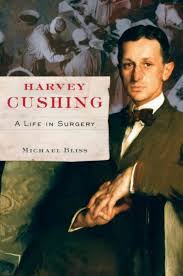

harvey-book

I found this biography fascinating!

I found Dr. Cushing’s life to be most interesting. I had previously known of him mainly because his name is associated with a disease I had – Cushing’s. This book doesn’t talk nearly enough about how he came to discover the causes of Cushing’s disease, but I found it to be a valuable resource, anyway.
I was so surprised to learn of all the “firsts” Dr. Cushing brought to medicine and the improvements that came about because of him. Dr. Cushing introduced the blood pressure sphygmomanometer to America, and was a pioneer in the use of X-rays.

He even won a Pulitzer Prize. Not for medicine, but for writing the biography of another Doctor (Sir William Osler).

Before his day, nearly all brain tumor patients died. He was able to get the number down to only 5%, unheard of in the early 1900s.

This is a very good book to read if you want to learn more about this most interesting, influential and innovative brain surgeon.


What Would Harvey Say?
harvey-book

(BPT) – More than 80 years ago renowned neurosurgeon, Dr. Harvey Cushing, discovered a tumor on the pituitary gland as the cause of a serious, hormone disorder that leads to dramatic physical changes in the body in addition to life-threatening health concerns. The discovery was so profound it came to be known as Cushing’s disease. While much has been learned about Cushing’s disease since the 1930s, awareness of this rare pituitary condition is still low and people often struggle for years before finding the right diagnosis.

Read on to meet the man behind the discovery and get his perspective on the present state of Cushing’s disease.

* What would Harvey Cushing say about the time it takes for people with Cushing’s disease to receive an accurate diagnosis?

Cushing’s disease still takes too long to diagnose!

Despite advances in modern technology, the time to diagnosis for a person with Cushing’s disease is on average six years. This is partly due to the fact that symptoms, which may include facial rounding, thin skin and easy bruising, excess body and facial hair and central obesity, can be easily mistaken for other conditions. Further awareness of the disease is needed as early diagnosis has the potential to lead to a more favorable outcome for people with the condition.

* What would Harvey Cushing say about the advances made in how the disease is diagnosed?

Significant progress has been made as several options are now available for physicians to use in diagnosing Cushing’s disease.

In addition to routine blood work and urine testing, health care professionals are now also able to test for biochemical markers – molecules that are found in certain parts of the body including blood and urine and can help to identify the presence of a disease or condition.

* What would Harvey Cushing say about disease management for those with Cushing’s disease today?

Patients now have choices but more research is still needed.

There are a variety of disease management options for those living with Cushing’s disease today. The first line and most common management approach for Cushing’s disease is the surgical removal of the tumor. However, there are other management options, such as medication and radiation that may be considered for patients when surgery is not appropriate or effective.

* What would Harvey Cushing say about the importance of ongoing monitoring in patients with Cushing’s disease?

Routine check-ups and ongoing monitoring are key to successfully managing Cushing’s disease.

The same tests used in diagnosing Cushing’s disease, along with imaging tests and clinical suspicion, are used to assess patients’ hormone levels and monitor for signs and symptoms of a relapse. Unfortunately, more than a third of patients experience a relapse in the condition so even patients who have been surgically treated require careful long-term follow up.

* What would Harvey Cushing say about Cushing’s disease patient care?

Cushing’s disease is complex and the best approach for patients is a multidisciplinary team of health care professionals working together guiding patient care.

Whereas years ago patients may have only worked with a neurosurgeon, today patients are typically treated by a variety of health care professionals including endocrinologists, neurologists, radiologists, mental health professionals and nurses. We are much more aware of the psychosocial impact of Cushing’s disease and patients now have access to mental health professionals, literature, patient advocacy groups and support groups to help them manage the emotional aspects of the disease.

Learn More

Novartis is committed to helping transform the care of rare pituitary conditions and bringing meaningful solutions to people living with Cushing’s disease. Recognizing the need for increased awareness, Novartis developed the “What Would Harvey Cushing Say?” educational initiative that provides hypothetical responses from Dr. Cushing about various aspects of Cushing’s disease management based on the Endocrine Society’s Clinical Guidelines.

For more information about Cushing’s disease, visit www.CushingsDisease.com or watch educational Cushing’s disease videos on the Novartis YouTube channel at www.youtube.com/Novartis.

From http://www.jsonline.com/sponsoredarticles/health-wellness/what-would-harvey-cushing-say-about-cushings-disease-today8087390508-253383751.html

🍰 Harvey Cushing: The father of modern neurosurgery

3117422_yjbm_84_2_91_g10


Harvey Cushing (1869-1939) is considered to be the father of modern neurological surgery. In the early part of the 20th century, he developed basic techniques and instruments for operating on the brain and, as a result, founded the discipline as a distinct surgical speciality. Before Cushing began his career, brain tumours were considered to be inoperable, and the mortality rate for any surgical procedure which involved opening the skull was around 90%. Early in his career, Cushing dramatically reduced the mortality rate for neurosurgery to less than 10%, and by the time of his retirement in 1937, he had successfully removed more than 2,000 tumours.