🦓 Day 8: Cushing’s Awareness Challenge 2018

It’s Here!

Dr. Cushing was born in Cleveland Ohio. The fourth generation in his family to become a physician, he showed great promise at Harvard Medical School and in his residency at Johns Hopkins Hospital (1896 to 1900), where he learned cerebral surgery under William S. Halsted

After studying a year in Europe, he introduced the blood pressure sphygmomanometer to the U.S.A. He began a surgical practice in Baltimore while teaching at Johns Hopkins Hospital (1901 to 1911), and gained a national reputation for operations such as the removal of brain tumors. From 1912 until 1932 he was a professor of surgery at Harvard Medical School and surgeon in chief at Peter Bent Brigham Hospital in Boston, with time off during World War I to perform surgery for the U.S. forces in France; out of this experience came his major paper on wartime brain injuries (1918). In addition to his pioneering work in performing and teaching brain surgery, he was the reigning expert on the pituitary gland since his 1912 publication on the subject; later he discovered the condition of the pituitary now known as “Cushing’s disease“.

Read more about Dr. Cushing

Today, April 8th, is Cushing’s Awareness Day. Please wear your Cushing’s ribbons, t-shirts, awareness bracelets or Cushing’s colors (blue and yellow) and hand out Robin’s wonderful Awareness Cards to get a discussion going with anyone who will listen.

And don’t just raise awareness on April 8.  Any day is a good day to raise awareness.
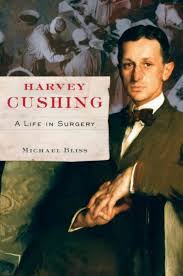

harvey-book

I found this biography fascinating!

I found Dr. Cushing’s life to be most interesting. I had previously known of him mainly because his name is associated with a disease I had – Cushing’s. This book doesn’t talk nearly enough about how he came to discover the causes of Cushing’s disease, but I found it to be a valuable resource, anyway.
I was so surprised to learn of all the “firsts” Dr. Cushing brought to medicine and the improvements that came about because of him. Dr. Cushing introduced the blood pressure sphygmomanometer to America, and was a pioneer in the use of X-rays.

He even won a Pulitzer Prize. Not for medicine, but for writing the biography of another Doctor (Sir William Osler).

Before his day, nearly all brain tumor patients died. He was able to get the number down to only 5%, unheard of in the early 1900s.

This is a very good book to read if you want to learn more about this most interesting, influential and innovative brain surgeon.


What Would Harvey Say?

More than 80 years ago renowned neurosurgeon, Dr. Harvey Cushing, discovered a tumor on the pituitary gland as the cause of a serious, hormone disorder that leads to dramatic physical changes in the body in addition to life-threatening health concerns. The discovery was so profound it came to be known as Cushing’s disease. While much has been learned about Cushing’s disease since the 1930s, awareness of this rare pituitary condition is still low and people often struggle for years before finding the right diagnosis.

Read on to meet the man behind the discovery and get his perspective on the present state of Cushing’s disease.

* What would Harvey Cushing say about the time it takes for people with Cushing’s disease to receive an accurate diagnosis?

Cushing’s disease still takes too long to diagnose!

Despite advances in modern technology, the time to diagnosis for a person with Cushing’s disease is on average six years. This is partly due to the fact that symptoms, which may include facial rounding, thin skin and easy bruising, excess body and facial hair and central obesity, can be easily mistaken for other conditions. Further awareness of the disease is needed as early diagnosis has the potential to lead to a more favorable outcome for people with the condition.

* What would Harvey Cushing say about the advances made in how the disease is diagnosed?

Significant progress has been made as several options are now available for physicians to use in diagnosing Cushing’s disease.

In addition to routine blood work and urine testing, health care professionals are now also able to test for biochemical markers – molecules that are found in certain parts of the body including blood and urine and can help to identify the presence of a disease or condition.

* What would Harvey Cushing say about disease management for those with Cushing’s disease today?

Patients now have choices but more research is still needed.

There are a variety of disease management options for those living with Cushing’s disease today. The first line and most common management approach for Cushing’s disease is the surgical removal of the tumor. However, there are other management options, such as medication and radiation that may be considered for patients when surgery is not appropriate or effective.

* What would Harvey Cushing say about the importance of ongoing monitoring in patients with Cushing’s disease?

Routine check-ups and ongoing monitoring are key to successfully managing Cushing’s disease.

The same tests used in diagnosing Cushing’s disease, along with imaging tests and clinical suspicion, are used to assess patients’ hormone levels and monitor for signs and symptoms of a relapse. Unfortunately, more than a third of patients experience a relapse in the condition so even patients who have been surgically treated require careful long-term follow up.

* What would Harvey Cushing say about Cushing’s disease patient care?

Cushing’s disease is complex and the best approach for patients is a multidisciplinary team of healthcare professionals working together guiding patient care.

Whereas years ago patients may have only worked with a neurosurgeon, today patients are typically treated by a variety of healthcare professionals including endocrinologists, neurologists, radiologists, mental health professionals and nurses. We are much more aware of the psychosocial impact of Cushing’s disease and patients now have access to mental health professionals, literature, patient advocacy groups and support groups to help them manage the emotional aspects of the disease.

From http://www.jsonline.com/sponsoredarticles/health-wellness/what-would-harvey-cushing-say-about-cushings-disease-today8087390508-253383751.html

MaryO

🎤 Interview Archive with Karen N, Cyclical Cushing’s


Karen (Rooon55), February 21, 2008. Karen’s disease started when she was a little girl (7) and she finally got a diagnosis in 2005. She had cycling Cushing’s, Thyroid disease, GH deficiency, and Autoimmune Alopecia. She believes she is cured after two Pituitary surgeries.

A doctor didn’t advise Vermont’s Karen Nolan (Rooon on the boards) that she might be one of the scant 3.5 per million people diagnosed annually with Cushing’s disease – another Cushing’s patient did.

Listen at http://www.blogtalkradio.com/cushingshelp/2008/02/22/karen-nolan-cyclical-cushings

🦓 Day 7: Cushing’s Awareness Challenge 2018

In Day 12 on April 12, 2017, I wrote about how we got the Cushing’s colors of blue and yellow.  This post is going to be about the first Cushing’s ribbons.


I was on vacation in September 2001 when SuziQ called me to let me know that we had had our first Cushie casualty (that we knew about).

On the message boards, Lorrie wrote: Our dear friend, Janice died this past Tuesday, September 4, 2001. I received an IM from her best friend Janine, tonight. Janine had been reading the boards, as Janice had told her about this site, and she came upon my name and decided to IM me. I am grateful that she did. She said that she knew that Janice would want all of us to know that she didn’t just stop posting.

For all of the newcomers to the board that did not know Janice, she was a very caring individual. She always had something positive to say. Janice was 36 years old, was married and had no children. She had a miscarriage in December and began to have symptoms of Cushing’s during that pregnancy. After the pregnancy, she continued to have symptoms. When discussing this with her doctor, she was told that her symptoms were just related to her D&C. She did not buy this and continued until she received the accurate diagnosis of Cushing’s Syndrome (adrenal) in March of 2001. Tragically, Janice’s tumor was cancerous, a very rare form of Cushing’s.

Janice then had her tumor and adrenal gland removed by open adrenalectomy, a few months ago. She then began chemotherapy. She was very brave through this even though she experienced severe side effects, including weakness and dizziness. She continued to post on this board at times and even though she was going through so much, she continued with a positive attitude. She even gave me a referral to a doctor a few weeks ago. She was my inspiration. Whenever I thought I had it bad, I thought of what she was dealing with, and I gained more perspective.

Janice was having difficulty with low potassium levels and difficulty breathing. She was admitted to the hospital, a CT scan was done and showed tumor metastasis to the lungs. She then was begun on a more aggressive regimen of chemo. She was discharged and apparently seemed to be doing well.

The potassium then began to drop again, she spiked a temp and she was again admitted to the hospital. She improved and was set to be discharged and then she threw a blood clot into her lungs. She was required to be put on a ventilator. She apparently was at high risk for a heart attack. Her husband did not want her to suffer anymore and did not want her to suffer the pain of a heart attack and so chose for the doctors to discontinue the ventilator on Tuesday. She died shortly thereafter.

Janice was our friend. She was a Cushie sister. I will always remember her. Janine asked me to let her know when we get the Cushing’s ribbons made as she and the rest of Janice’s family would like to wear them in her memory. She said that Janice would want to do anything she could to make others more aware of Cushing’s.

The image at the top of the page shows the first blue and yellow ribbon which were worn at Janice’s funeral.  When we had our “official ribbons” made, we sent several to Janice’s family.

Janice was the first of us to die but there have been more, way too many more, over the years.  I’ll write a bit more about that on Day 21.

🎤 Interview Archive: Mary O’Connor (MaryO) interviewed Robin Smith (staticnrg)


Mary O’Connor, Cushings-Help.com founder interviewed Robin Smith (staticnrg). Robin had Cushing’s for over 20 years, at least. Of course, no one figured it out or even put two and two together until her new PCP whom Robin found in 2004 said “endocrine”. She didn’t figure it out, either, but at least Robin had a piece of the puzzle and Robin found www.cushings-help.com. Robin immediately went into denial and left for several months until Robin got so sick Robin knew she had to…

Listen to the interview at http://www.blogtalkradio.com/cushingshelp/2008/02/15/symptoms-and-diagnosis-part-2-cushings-message-board-members

⁉️ Myths and Facts about Cushing’s: YOU are the problem and the reason…

Myth: YOU are the problem and the reason for your cortisol levels. Having issues with too much or too little cortisol, the stress hormone, means that YOU are stressing too much or are too anxious. “YOU could control your levels if you would JUST calm down!”
myth-busted
Fact: YOU are NOT the problem! The dysfunction in your body is the problem. It is true that cortisol is your stress hormone or fight or flight hormone. This hormone helps your body compensate for and deal with trauma or stress, both physical and emotional. So, yes, your body does have a reaction to stress.
However, for people with Cushing’s, that hormone goes haywire. Too much cortisol leads to Cushing’s symptoms and having too little cortisol leads to Adrenal Insufficiency. Normally, our bodies’ response to stress is to pump out 10X the amount of your baseline cortisol to cope. If it is not able to do this, it will go into shock and can lead to death unless the emergency protocol is followed with an emergency injection of steroid. No amount of coping skills can “control” one’s physiological response to stress.

🎤 Surgical Management of Cushing’s Disease

Presented By:

Russell Lonser, MD, FAANS
Professor and Chair
Department of Neurological Surgery
Ohio State University Wexner Medical Center


After registering you will receive a confirmation email with details about joining the webinar.

Contact us at webinar@pituitary.org with any questions or suggestions.

Date: April 10, 2018
Time: 10:00 AM-11:00 AM Pacific Daylight Time, 1:00 PM – 2:00 PM Eastern Daylight Time

Learning Objectives:

  1. To define clinical features of Cushing’s disease.
  2. To describe management paradigms for Cushing’s disease.
  3. To understand the evaluation of Cushing’s disease patients.

Presenter Bio:

LonserRussell R. Lonser graduated with a B.A. in economics from Andrews University in 1990 and received his M.D. from Loma Linda University in 1994. He completed his neurosurgical training at the University of Utah in 2001. During his residency, he performed a 2-year research fellowship under the mentorship of Edward H. Oldfield, M.D., in the Surgical Neurology Branch at the National Institutes of Health (NIH). Upon completion of his residency, he joined the staff of the Surgical Neurology Branch at the NIH. He was Chief of the Surgical Neurology Branch at NIH before becoming Professor and Chair of the Department of Neurological Surgery at Ohio State University in 2012. He holds the Dardinger Family Chair in Neurosurgical Oncology.

Dr. Lonser’s research interests include development of drug delivery paradigms for the central nervous system pathology, as well as investigation of tumor pathogenesis and biology. Specifically, his scientific efforts are directed toward studying convective delivery and neoplasia pathogenesis/propagation in familial tumor suppressor syndromes, including von Hippel-Lindau disease. His clinical and surgical interests are centered on the treatment of brain, temporal bone and spinal cord tumors. He is an author on over 300 scientific and clinical publications. He received the Tumor Young Investigator Award from the American Association of Neurological Surgeons/Congress of Neurological Surgeons Section on Tumors in 2001 and Mahaley Clinical Research Award from the American Association of Neurological Surgeons/Congress of Neurological Surgeons Section on Tumors in 2013. He was the 2017 American Association of Neurological Surgeons/Congress of Neurological Surgeons Section on Tumors Bittner Lecturer. He is a co-inventor on a patent for methods for convection-enhanced delivery of therapeutic agents.

His contributions to organized neurosurgery include membership on the Executive Committee of the Congress of Neurological Surgeons. He was the Treasurer of the Congress of Neurological Surgeons and is President of the Congress of Neurological Surgeons. He also served on the Executive Committee for the American Association of Neurological Surgeons/Congress of Neurological Surgeons Section on Tumors. He has served on a number national committees for organizations involved in neurosurgical research. He is head of the Research Subcommittee in Head, Neck and Spine Injury Committee for the National Football League. He has been actively involved in the mentoring and training of over 40 neurosurgical fellows. He is on the Editorial Boards for NEUROSURGERY, World Neurosurgery and Journal of Neurosurgery. He is an Academic Editor for PLoS One and Science Reports. He is Consulting Editor for Neurosurgery Clinics of North America.

Dr. Lonser is married to Carolyn. They have 3 daughters, Hannah (born 2001), Sarah (2004) and Alicia (2007).

🎤 Interview Archive with Alicia, a patient who is still testing


Interview with Alicia, a Cushing’s Message Board member who is still testing. Alicia writes “Around the end of my Junior year, probably one of the worst things that could have happened during my 8 years of illness happened, I had severe psychiatric symptoms at school, including psychosis, and was put on a “students in crisis” plan and sent home for a little while. Being diagnosed as a “psych patient” would delay my diagnosis for years, most doctors just considered me “crazy.”

Listen at http://www.blogtalkradio.com/cushingshelp/2008/02/08/alicia-a-patient-who-is-still-testing

HOME | Sitemap | Adrenal Crisis! | Abbreviations | Glossary | Forums | Donate | Bios | Add Your Bio | Add Your Doctor | MemberMap | CushieWiki

🦓 From a Past Blogging Challenge: Cushing’s Awareness Challenge – Day 5

From Danielle’s Cushing’s Awareness Challenge Blog

Social media dominates most people’s lives these days. You see what everyone you know is up to, but the problem is, most people only post about the highlights of their lives.

You don’t get to see the low points, the every day struggles. You don’t see what keeps them up at night with worry.

Read more at http://www.lifewithcushings.com/2017/04/cushings-awareness-challenge-day-5.html

Day 5: Cushing’s Awareness Challenge 2018


Sleep.  Naps.  Fatigue, Exhaustion.  I still have them all.  I wrote on my bio in 1987 after my pituitary surgery “I am still and always tired and need a nap most days. I do not, however, still need to take whole days off just to sleep.”

That seems to be changing back, at least on the weekends.  A recent weekend, both days, I took 7-hour naps each day and I still woke up tired. That’s awfully close to taking a whole day off to sleep again.

In 2006, I flew to Chicago, IL for a Cushing’s weekend in Rockford.  Someone else drove us to Lake Geneva, Wisconsin for the day.  Too much travel, too Cushie, whatever, I was too tired to stay awake.  I actually had put my head down on the dining room table and fallen asleep but our hostess suggested the sofa instead.  Amazing that I traveled that whole distance – and missed the main event 🙁

Sleeping in Rockford

This sleeping thing really impacts my life.  Between piano lessons, I take a nap.  I sleep as late as possible in the mornings and afternoons are pretty much taken up by naps.  I nod off at night during TV. One time I came home between church services and missed the third service because I fell asleep.

I only TiVo old tv shows that I can watch and fall asleep to since I already know the ending.

At the beginning of last year, I was doing physical therapy twice a week for 2 hours at a time for a knee injury (read more about that in Bees Knees).  I come home from that exhausted – and in more pain than I went.  I know it worked some and my knee is getting better, but it’s such a time and energy sapper.  Neither of which I can really spare.

Now that I’m nearly 12  years out from my kidney cancer (May 9, 2006) I have gone back on Growth Hormone again.  My kidney surgeon says he “thinks” it’s ok.  I’ve asked my endo about it and he finally gave it an ok last summer.  Considering the GH wasn’t supposed to contribute to my cancer, it’s interesting that these doctors prefer me not to be on it.  I want to feel better and get the benefits of the GH again but I don’t want any type of cancer again and I certainly can’t afford to lose another kidney.

I’m not sure how long I will stay on the Gh this time since I have a very high co-pay and I’m not seeing any benefit.

I’ll probably just muddle through without it.  I always laugh when I see that commercial online for something called Serovital.  I saw it in Costco the other day and it mentions pituitary right on the package.  I wish I could take the people buying this, sit them down and tell them not to mess with their pituitary glands.  But I won’t.  I’ll take a nap instead because I’m feeling so old and weary today, and yesterday.

And tomorrow…

🦓 From a Past Blogging Challenge: Cushing’s Awareness Challenge – Day 4

From Danielle’s Blog:  http://www.lifewithcushings.com/2017/04/cushings-awareness-challenge-day-4.html

I have often said, I wish I had cancer instead. Most people would not understand this sentiment, why in the world would you wish for such a horrible disease?

It is another common thread tying people with chronic illness together. If my disease was cancer, everyone would know what it was. I wouldn’t be questioned by my boss when I called in sick. My friends and family would be more supportive. My doctors wouldn’t question my symptoms.

Maybe my life would be easier.

Read the rest of the post at http://www.lifewithcushings.com/2017/04/cushings-awareness-challenge-day-4.html